


Journalists should treat information we gather on social media the same way we treat information gathered any other way, or an assurance from Mom that she loves you: Check it out. My #twutorial ser...


|
Scooped by
Robin Good
onto Content Curation World January 21, 2013 10:45 AM
|
 Scoop.it!
Journalists should treat information we gather on social media the same way we treat information gathered any other way, or an assurance from Mom that she loves you: Check it out. My #twutorial ser...
If you are using Twitter to any kind of serious reporting, research or journalism work, you should read this guide by Steve Buttry.
From the intro: "Given the errors some journalists made in reporting on the Sandy Hook massacre and in the original reporting on Manti Te’o's fake girlfriend, this feels like a good time to stress accuracy and verification.
The most simple and important advice I can give is that Twitter is like any other information source — documents, anonymous tips, news releases, press conferences, interviews, databases — it can provide valuable information or deliberate lies or innocent errors. Your job is to verify the information that looks useful. As with all the other information you gather, you can verify lots of different ways, and no single technique works for everything.
Some of the tips I provide here will be specific to Twitter or to social media generally. Some will be general verification tips applied to Twitter."
Great guide. Resourceful. 8/10
Full guide: http://stevebuttry.wordpress.com/2013/01/21/how-to-verify-information-from-tweets-check-it-out/


 Your new post is loading...
 Your new post is loading...
Your new post is loading...
Scoop.it!
A truly inspiring class project by @JoyceValenza.
Robin Good's insight:
Wonderful school project uses musical performance to promote the value of curation for learning.
Curation, Curation Curation!
Who day and night must aggregate the content, pull together knowledge, harness all the feeds
And who must make sense of media, tags, and text, keeping learners up to date, at school
Librarian, Librarian
Librarian, Librarian,
Who do we rely on for creative stuff
Who must point the way to stuff that’s good enough
The Network, the Network. Curation!
At ten my three-ring notebook really held all my school stuff.
The student, the student. Curation!
And who does TL teach to curate with new tools,
The learner, the learner! Curation!
-----------
Ben Vizzachero
Thanks to Monica Femovich
Song parody by
Based on "Tradition" and "Matchmaker" from Fiddler on the Roof.

Wegovy Semaglutide's curator insight,
May 22, 2024 6:28 AM
https://acheterozempic5mg.com/ https://ozempickopen.com/ https://ozempiccomprar1mg.com/ https://acquistoozempic.com/ https://acquistasubutexonline.com/ https://acquistasubutexonline.com/ Aeropuerto Adolfo Suárez Madrid-Barajas koop ozempic Nederland acquisto ozempic acheter ozempic acquista subutex online 
Acquistaossicodon's curator insight,
February 22, 3:25 AM
https://www.acquistaossicodon.com/prodotto/acquista-u-47700-online/
https://www.acquistaossicodon.com/prodotto/acquista-eroina-online/ https://www.acquistaossicodon.com/prodotto/sciroppo-di-prometazina-hi-tech/ https://www.acquistaossicodon.com/prodotto/wockhardt-mgp-sciroppo/ https://www.acquistaossicodon.com/prodotto/sciroppo-di-codeina-linctus/ https://www.acquistaossicodon.com/prodotto/actavis-prometazina-codeina/ ? https://www.acquistaossicodon.com/prodotto/acquista-lsd-online/ https://www.acquistaossicodon.com/prodotto/acquista-dmt-online/ https://www.acquistaossicodon.com/prodotto/acquista-fentermina-in-linea/ https://www.acquistaossicodon.com/prodotto/acquista-1p-eth-lad/ https://www.acquistaossicodon.com/prodotto/acquista-efedrina-hcl-online/ https://www.acquistaossicodon.com/prodotto/acquista-oramorph-oral-online/ https://www.acquistaossicodon.com/prodotto/polvere-di-fentanil/ ? https://www.acquistaossicodon.com/prodotto/iniezione-di-citrato-di-fentanil/ https://www.acquistaossicodon.com/prodotto/furanil-fentanil-in-polvere/ https://www.acquistaossicodon.com/prodotto/cerotto-di-mylan-fentanil/ https://www.acquistaossicodon.com/prodotto/abstral-fentanil-in-pillole/ https://www.acquistaossicodon.com/prodotto/acquista-cianuro-di-sodio/ https://www.acquistaossicodon.com/prodotto/acquista-pillole-nembutali/ https://www.acquistaossicodon.com/prodotto/acquista-polvere-nembutal-online/ https://www.acquistaossicodon.com/prodotto/kit-di-prova-nembutal/ ? https://www.acquistaossicodon.com/prodotto/cianuro-di-potassio/ https://www.acquistaossicodon.com/prodotto/acquistare-il-nembutal-online/ https://www.acquistaossicodon.com/prodotto/acquista-film-suboxone-2mg-online/ https://www.acquistaossicodon.com/prodotto/acquista-suboxon…2mg-films-online/ https://www.acquistaossicodon.com/prodotto/acquista-suboxone-8mg-2mg-online/ https://www.acquistaossicodon.com/prodotto/acquista-suboxone-16mg-4mg-online/ https://www.acquistaossicodon.com/prodotto/acquista-suboxone-4mg-films-online/ ? https://www.acquistaossicodon.com/prodotto/oxycodone-30mg-kvk-tech-acquistare/ https://www.acquistaossicodon.com/prodotto/acquista-dilaudi…iniezione-online/ https://www.acquistaossicodon.com/prodotto/30-mg-di-ossicodone-acquista/ https://www.acquistaossicodon.com/prodotto/acquista-blu-xanax-online/ https://www.acquistaossicodon.com/prodotto/30-mg-di-ossicodone-acquista/ https://www.acquistaossicodon.com/prodotto/acquista-focalin-online/ https://www.acquistaossicodon.com/prodotto/acquista-demerol-online/ https://www.acquistaossicodon.com/prodotto/acquista-morfina-solfato-online/ ? https://www.acquistaossicodon.com/prodotto/acquista-a-215-ossicodone-actavis/ https://www.acquistaossicodon.com/prodotto/acquista-roxicodone-online/ https://www.acquistaossicodon.com/prodotto/acquista-norco-online/ https://www.acquistaossicodon.com/prodotto/acquista-idrocodone-online/ https://www.acquistaossicodon.com/prodotto/opana-oxymorphone-hcl-40mg/ https://www.acquistaossicodon.com/prodotto/acquista-subutex-online/ ? https://www.acquistaossicodon.com/prodotto/acquista-oxycontin-online/ https://www.acquistaossicodon.com/prodotto/acquista-levitra-20mg-online/ https://www.acquistaossicodon.com/prodotto/acquista-dilaudid-online/ https://www.acquistaossicodon.com/prodotto/acquista-suboxone-2mg-0-5mg-online/ https://www.acquistaossicodon.com/prodotto/acquista-ativan-2mg-online/ https://www.acquistaossicodon.com/prodotto/acquista-ativan-2mg-online/ https://www.acquistaossicodon.com/prodotto/acquista-ambien-online/ https://www.acquistaossicodon.com/prodotto/acquista-lortab-online/ https://www.acquistaossicodon.com/prodotto/xanax-bars-2mg-alprazolam/ ? https://www.acquistaossicodon.com/prodotto/xanax-bars-2mg-alprazolam/ ? https://www.acquistaossicodon.com/prodotto/acquista-adderall-30mg-online/ https://www.acquistaossicodon.com/prodotto/acquista-vyvanse-online/ https://www.acquistaossicodon.com/prodotto/acquista-ritalin-online/ https://www.acquistaossicodon.com/prodotto/acquista-ossicodone-80mg-sandoz/
Scoop.it!
"I still have to do all the searching for new and good content sources and filtering the content I get. Separating the crap from the awesome. All by myself. This is hard work and very time consuming"
Robin Good's insight:
"I still have to do all the searching for new and good content sources and filtering the content I get. Separating the crap from the awesome. All by myself. This is hard work and very time consuming". But wait a minute! What you describe here is the key, absolute value a curator can provide: his time. The more we try to bypass this in favour of tools that can automate this time-consuming and difficult work the more we give up the opportunity to truly add unique value to your curated content. Not to say that a good curator should not have a great toolset to help him out. But remember: There will never be any tool that can do better search than you (unless you know nothing about what you are curating). No tool that can tell whether an article is a retake of another one or a true original, or that can evaluate the insight and ideas a new perspective from a new author unknown author can bring. This in my opinion is what a content curator does. Would a painter or a sculptor want to automate or speed up parts of his artistic creation process?
Similarly the content curator is socially useful and provides value to other people by utilising his many skills and experiences to gather, find, collect, organise, add value and present information artifacts covering a specific topic, interest, issue or event. His realisation is in doing such things not in bypassing or speeding up these steps. This is one of the consequences of selling content curation as a content marketing "device" that can save time and make you look good. If you are after *volume* and *eyeballs* you will publish funny cats. But volume and traffic will not command much more than increasingly slimming advertising budgets. And for how long more? What we should be all after his instead learning and refining those curatorial skills that can help us provide the only thing our readers care about: having truly trusted guides that provide high-value information services for the specific interests they have. Yes, a content curator will also use, test and experiment with many different tools to aid its ability to search, find, collect and organise information, but definitely not in order to save time but in order to enhance and expand his abilities to provide greater value through those activities. What do you think?

Jeff Domansky's comment,
August 3, 2016 2:30 AM
Robin, my view is that better tools help us be better curators. Finding higher quality content faster allows more quality time for curators to add more valuable insight. I welcome better time-saving tools. Cheers!

Robin Good's comment,
August 3, 2016 5:00 AM
Jeff: Like if we got a better Photoshop we could do better images. The talent is not in the tools, but in our heads. Tools can help, but they can't make you do better work than what you are capable of. Practice is what does it. My two cents.

wilfredjudge103@gmail.com's comment,
May 16, 2024 8:10 PM
Losing my assets {crypto} to online scammers is one of the worst feeling i ever had.I was a victim to crypto online scams who made away with my $120,000 worth crypto (USDT) after investing with them in their platform.. Before the intervention of {ASSETS LAB} a recovery agency who helped me recoup back all the funds that was stolen from me ..
Three months ago i ran into a crypto investment platform called {GX TRADE} and they promise to assist me in crypto investment and mining and profits, after several weeks of following them on their platform where they teach their subscribers about crypto mining and investment and offering assistance to help their subscribers to make profits for them by persuading us to invest on their platform {Gx trade }.. 2 months ago i decided to invest with them , i did all the necessary requirements and agreement was reached..One week later , i went to to check on them on their platform and discovered that i cant reach them anymore on any of their platform which turns out to be a scam after so many enquirement and confirmations .. i was devastated and nearly lost my life on the process. But thanks to my friend who introduced me to {ASSETS LAB LTD} a crypto recovery agency who helped me recover every penny stolen from me by the crypto scammers after a month of submitting my case to them . They followed my case diligently and made sure they recovered my funds and brought back life and joy to me and my family again .. Contact {ASSETS LAB LTD } for any of your recovery including crypto recovery and any of your lost assets .. You can save a life today. FIRM : ASSETS LAB LTD Email: info@lab-assets.tech Website: https://lab-assets.tech/ Whatsapp: +17126004729
Scoop.it!
Robin Good's insight:
"When we curate content online, it enhances who we are, both in the sense of... - we learn things, and we help to define ourselves by understanding our own interests - and in a more external way, by allowing other people to better understand who we are. It becomes part of our ethos, part of our personal brand." Dr. Gideon Burton of Brigham Young University offers an interesting insight into why curation is such a valuable activity for humankind by pointing out that our efforts to gather, collect and order the information chaos surrounding us, is a critical activity to understand ourselves, to learn more about anything, to make sense of the world we live in. Even at the lowest, most amateurish level of social sharing or bookmarking, our best efforts to collect and order information, even when they are imperfect, incomplete or even inaccurate, do have great value. The value is in the opportunity we create for others to discover, to get a better hint or a better understanding, of what we have collected and sorted. And even when collecting is a personal act of self-expression or a reflection of a pet interest, still, there is value, as "people are a very important way by which we can order our understanding of the world". Content curation enhances who we are because it helps us Understand and Navigate the world we live in through someone else eyes and experience. Inspiring. Truthful. Great perspective from which to look and appreciate the full value of curation. Highly recommended. 10/10 Clip: https://www.youtube.com/watch?v=dKu3HBEgtZ4&feature=youtu.be Original full video lecture by Dr. Gideon Burton: https://youtu.be/JUvdnhanDjU Dr. Gideon Burton: http://english.byu.edu/faculty/gideon-burton https://twitter.com/wakingtiger https://www.linkedin.com/in/gideonburton The Forest of Rethoric an example of valuable content curation created by Dr. Gideon Burton

cheersitskatie's curator insight,
June 22, 2020 8:10 PM
I think curating content to reflect our own personalities and interests is key in creating a loyal audience with whom we can feel more connected.

Jenn's curator insight,
March 15, 2024 11:08 AM
"When we curate content online, it enhances who we are, both in the sense of... - we learn things, and we help to define ourselves by understanding our own interests - and in a more external way, by allowing other people to better understand who we are. It becomes part of our ethos, part of our personal brand." Dr. Gideon Burton of Brigham Young University offers an interesting insight into why curation is such a valuable activity for humankind by pointing out that our efforts to gather, collect and order the information chaos surrounding us, is a critical activity to understand ourselves, to learn more about anything, to make sense of the world we live in. Even at the lowest, most amateurish level of social sharing or bookmarking, our best efforts to collect and order information, even when they are imperfect, incomplete or even inaccurate, do have great value. The value is in the opportunity we create for others to discover, to get a better hint or a better understanding, of what we have collected and sorted. And even when collecting is a personal act of self-expression or a reflection of a pet interest, still, there is value, as "people are a very important way by which we can order our understanding of the world". Content curation enhances who we are because it helps us Understand and Navigate the world we live in through someone else eyes and experience. Inspiring. Truthful. Great perspective from which to look and appreciate the full value of curation. Highly recommended. 10/10 Clip: https://www.youtube.com/watch?v=dKu3HBEgtZ4&feature=youtu.be Original full video lecture by Dr. Gideon Burton: https://youtu.be/JUvdnhanDjU Dr. Gideon Burton: http://english.byu.edu/faculty/gideon-burton https://twitter.com/wakingtiger https://www.linkedin.com/in/gideonburton The Forest of Rethoric an example of valuable content curation created by Dr. Gideon Burton
Wegovy Semaglutide's curator insight,
May 22, 2024 6:28 AM
https://acheterozempic5mg.com/ https://ozempickopen.com/ https://ozempiccomprar1mg.com/ https://acquistoozempic.com/ https://acquistasubutexonline.com/ https://acquistasubutexonline.com/ Aeropuerto Adolfo Suárez Madrid-Barajas koop ozempic Nederland acquisto ozempic acheter ozempic acquista subutex online
Scoop.it!
Robin Good's insight:
Silk is a web tool to publish online spreadsheet-based data on a specific topic. The service, which just released a new version of its offering, allows to easily convert any existing data-set into professional-looking data displays, charts, grids, and lists that can be embedded on any site and which can be viewed in multiple ways. The value of Silk is specifically in making it easy and immediate for anyone to elegantly display and publish data sets in one of several alternative formats which include:
How it works: Import a table from Excel, Google Sheets or any .csv file, select the fields you want to import and Silk does the rest offering you tools to filter, edit and select your preferred visualization approach. You can also create data sets and displays from scratch inside Silk, and set each Silk either as public or private. Why it is relevant for content curators: Silk provides a unique and powerful opportunity to leverage existing data and information assets, spreadsheets and databases and to convert them into highly legible and visually impactful data displays on a very specific topic. My evaluation: Paired with the power of Kimonolabs or Import.io to convert any website or page content into a spreadsheet, it offers great potential in creating value by providing multiple professional formats to display, present and interact with such data. Free forever for public Silks of up to 3000 pages. Try it out now: https://www.silk.co/ Video tutorials: https://www.silk.co/product

Grouptech21's curator insight,
March 10, 2016 3:54 PM
Silk is a web tool to publish online spreadsheet-based data on a specific topic. The service, which just released a new version of its offering, allows to easily convert any existing data-set into professional-looking data displays, charts, grids, and lists that can be embedded on any site and which can be viewed in multiple ways. The value of Silk is specifically in making it easy and immediate for anyone to elegantly display and publish data sets in one of several alternative formats which include: Table ListGrid MosaicGroupsBarsMapDonutLinePieScatterStacksHow it works: Import a table from Excel, Google Sheets or any .csv file, select the fields you want to import and Silk does the rest offering you tools to filter, edit and select your preferred visualization approach. You can also create data sets and displays from scratch inside Silk, and set each Silk either as public or private. Why it is relevant for content curators: Silk provides a unique and powerful opportunity to leverage existing data and information assets, spreadsheets and databases and to convert them into highly legible and visually impactful data displays on a very specific topic. My evaluation: Paired with the power of Kimonolabs or Import.io to convert any website or page content into a spreadsheet, it offers great potential in creating value by providing multiple professional formats to display, present and interact with such data. Free forever for public Silks of up to 3000 pages. Try it out now: https://www.silk.co/ ; Video tutorials: https://www.silk.co/product ;
Scoop.it!
To hell with mass media. Journalism, properly conceived, is a service, not a content factory. As such, news must be built on relationships with individuals a...
Robin Good's insight:
At the recent International Journalism Festival in Perugia, Italy, Jeff Jarvis, Professor of Journalism at CUNY, gave a keynote speech that provides valuable insight and advice as to where the future of news and journalism are headed. While the full keynote and the Q&A with the audience is recorded in full in this 55' mins long video, I have summarised here below his key points and takeaways, so that you can get at least a good basic idea of his viewpoints in under 3 mins. The value of this keynote for content curators is the fact that Jeff Jarvis highlights and validates a process, mission and approach where the ability to collect, vet and curate information, resources and tools, to satisfy a specific need, is going to take a much more central and important role in the development of new forms journalism and in the evolution of the business models that will support it. Jeff Jarvis' Key 15 Takeaways on the Future of Journalism: 1. Mass audiences don't exist. This is just a way to look at people that served the mass media industry model. 2. Journalism is in the service business. We must fundamentally rethink the way we produce the news, so that they actually serve specific people needs. 3. Journalism needs to specialise. 4. Relationships and listening Need to listen and create relationships with their community Need to understand what the problems and needs and intercept them 5. Journalists need to become community advocates Need to change how we evaluate waht we do as journalists Must help people to make sense 6. Community. Move from media-centric to community-centric Go to the community first, to observe, to ask and listen, before creating content that serve their needs 7. Membership. This is not about subscriptions. It is about collaboration and what we do with the community we serve. People don't want to belong to a media organisation. People want to be part of true passionate communities. Community can contribute: Content, effort, marketing, resources, ideas, feedback, customer assistance, etc. 8. Beyond articles. Continuous live blogging, tweeting, data, etc. There a lot more formats that can be used to create valuable content. 9. Mobile is not about content delivery. Mobile is about use cases re-organise the news around the public specific needs we would create higher value that by following our own production cycle. What about if we broke up news in hundreds of different use cases that specifically apply to mobile? For example: give me all the world news that count in 2 mins. Or: I want to know everything that happens about this story, in real-time or: I want to connect with members of my community and accomplish something 10. We've to re-invent TV news TV news sucks. There is a lot of untapped tech that we can use. Great opportunities to do better. 11. Business Models - Digital first Every journalist is fully digital. Print comes after digital. Print no longer rules the culture of a newspaper. 12. The traditional (ad-based) mass media business model kills journalism. By importing the old business model of mass media onto the Internet, with reach and frequency, mass, scale, volume, we have corrupted journalism. Clicks will inevitably lead to cats. If your goal is more clicks you will put up more cats. We have to move past volume, to value. We need give more relevance to our readers. And we can do so only if we get to know them as individual members of a true communities. 13. Paywalls are not the way to go. The idea of selling content online doesn't work very well. Unless you are Bloomberg or someone who sells information that is very fresh and valuable for a specific need. 14. Native advertising is not going to save us. Rather, with it, we may giving up our true last values, as our own voices, authority and our ability to tell a story. If we fool our readers into thinking that native advertising comes from the same people who gives them the news, we have given up our last asset. Credibility. 15. Rethink the metrics. Views, clicks, likes are no longer appropriate. Attention is a better metric. (see Chartbeat). The metric that is count to count most is going to be more qualitative than quantitative and it is going to be about whether we are valuable in people's lives. I don't know how to measure that, but we need to find out how to do it. My comment: This is a must-watch video for any journalist seriously interested in getting a better feel for the direction and focus that news and journalism will take. Insightful. 10/10 Original video: https://youtu.be/RsPvnVeo1G0
Scoop.it!
Robin Good's insight:
PressForward is a free open-source, WordPress plugin for curating most any type of content within the standard WordPress publishing workflow. PressForward is designed to be used by multiple users, like in a distributed newsroom, where several individuals or even a small community suggest and submit and others edit, approve and post selected content. Last but not least, PressForward keeps close tabs on the sources you utilise, by automatically creating attribution links for any content you curate and allowing you to have your posts optionally auto-redirect to the original source. Free to use.
A project of Roy Rosenzweig Center for History and New Media

Stephen Dale's curator insight,
April 28, 2015 4:18 AM
Via Robin Good: "PressForward is a full-fledged RSS feed reader and aggregator which can capture content coming from any site while allowing full editing and curation abilities. It is an ideal tool for news curators wanting to have a news gathering and discovery tool integrated into their standard publishing and editing environment." #curation 
Mike McCallister's curator insight,
April 28, 2015 9:27 AM
Curating and sharing content is an important way of building your authority in your writing niche. If you really want to understand how to curate, follow Robin Good's "Content Curation World" on Scoop.it. Robin shared this WordPress plugin that can help you find and post interesting content directly inside WordPress. I'll be testing this soon.
Scoop.it!
Robin Good's insight:
Topik.in is a new news curation app, similar in many ways to a much simplified version of Scoop.it. With a dedicated bookmarklet you can basically curate and personalise any content you find online and post it to a dedicated *virtual board* on Topik.in There's none of the advanced backend content discovery engine features, nor the powerful embedding, domain name mapping, social sharing and publishing options that Scoop.it offers, but Topik.in is also much simpler and for anyone who would find Scoop.it too complex or feature-rich for his initial needs, it could be a potential starting point. Posts appear in a layout much similar to Scoop.it two-column magazine vertical layout. Content can be easily shared on all major social channels, and when a reader clicks on a curated post, the full original content page loads up under a Topik.in frame that maintains context and reference to the original curated post. It is possible to follow other boards and to repost content posted by others. During Beta each user can create up to 8 curated boards on different topics. Good for anyone wanting to get his feet wet with news curation without needing to get a more complex tool and without needing to spend anything. English and Spanish languages supported. Free to use. Try it out now: http://www.topik.in/ FAQ: http://www.topik.in/content/faq
Stephen Dale's curator insight,
April 27, 2015 8:34 AM
A news curation tool. A possible alternative to Scoop.it. Easier to use, but not as feature rich (e.g. lacks some of Scoop.it social sharing and publishing options)
Reading time: 5 mins 
Joyce Valenza's curator insight,
April 27, 2015 8:39 AM
A new curation tool, similar to Scoop.it, without the discover features. Simple and promising for creating on-the-fly boards and organizing topical content. via @robingood
Scoop.it!
Robin Good's insight:
This article points out in multiple ways and with some interesting supporting data how big is the problem for schools and educational institutions in trying to identify relevant tools to adopt in absence of expert trusted guides that they can rely on. The Hechingerreport writes: "...school leaders on this new frontier face a daunting challenge: from the slew of highly touted new products, how do they pick the right ones? “It’s hard for our people to know what all of the choices are,” said Penny Hodge, the assistant superintendent of budget and finance in Roanoke. “Maybe there were even better choices and we weren’t aware.” Today’s school leaders must navigate a market with little trustworthy evidence to show what works. Billions of dollars are being spent while educators try to untangle a maze of sales pitches." The problem of identifying the most appropriate tools, services or products is not a problem limited only to the education sector. Just about anyone who is not an tech-expert in his area would have a hard time today finding the most appropriate tools in the midst of so many offerings and so little trustworthy information about them. "Part of the reason is that credible evidence often isn’t available. Only one-third of school technology directors surveyed said that education technology companies offer reliable data on their products, according to the survey." The solution to this issue is already starting to emerge in the form of both non-profit and commercial companies who will devote their time and resources to scout, test, verify and review tools while providing the means to search, filter and compare them easily. Graphite.org, Edshelf are just two among many emerging examples of "reputable curation websites, with professional reviews and a social media component" that provide a one-stop solution for those in need of an expert and trusted guide in the tools for education area. Must read for anyone interested in better understanding where we are headed when it comes to choosing tools.. 9/10 Full article: http://hechingerreport.org/as-market-surges-schools-struggle-to-find-the-best-tech-products/ Check also this excellent head-to-head comparison between Graphite and EdShelf: http://www.psla.org/blog/edshelf-vs-graphite/ Image credit: Shutterstock

Filomena Gomes's curator insight,
April 18, 2015 9:54 AM
Robin Good's insight:
This article points out in multiple ways and with some interesting supporting data how big is the problem for schools and educational institutions in trying to identify relevant tools to adopt in absence of expert trusted guides that they can rely on.
The Hechingerreport writes: "...school leaders on this new frontier face a daunting challenge: from the slew of highly touted new products, how do they pick the right ones? “It’s hard for our people to know what all of the choices are,” said Penny Hodge, the assistant superintendent of budget and finance in Roanoke. “Maybe there were even better choices and we weren’t aware.” Today’s school leaders must navigate a market with little trustworthy evidence to show what works. Billions of dollars are being spent while educators try to untangle a maze of sales pitches." The problem of identifying the most appropriate tools, services or products is not a problem limited only to the education sector. Just about anyone who is not an tech-expert in his area would have a hard time today finding the most appropriate tools in the midst of so many offerings and so little trustworthy information about them.
"Part of the reason is that credible evidence often isn’t available. Only one-third of school technology directors surveyed said that education technology companies offer reliable data on their products, according to the survey."
The solution to this issue is already starting to emerge in the form of both non-profit and commercial companies who will devote their time and resources to scout, test, verify and review tools while providing the means to search, filter and compare them easily. Graphite.org, Edshelf are just two among many emerging examples of "reputable curation websites, with professional reviews and a social media component" that provide a one-stop solution for those in need of an expert and trusted guide in the tools for education area. Must read for anyone interested in better understanding where we are headed when it comes to choosing tools.. 9/10 Full article: http://hechingerreport.org/as-market-surges-schools-struggle-to-find-the-best-tech-products/ ;
Check also this excellent head-to-head coparison between Graphite and EdShelf: http://www.psla.org/blog/edshelf-vs-graphite/ ;
Scoop.it!
Robin Good's insight:
Matt Rosoff writes on Business Insider UK: Google Search is the most important product of a very wealthy and successful for-profit company. And Google will use this product to further its own commercial ends." (Not to help people find the most relevant info to their own learning needs.) This is an excellent article that should be read a couple of times slowly to remind oneself of Google key aspirations and limits. In it, the author illustrates with relevant references how Google uses whatever means it has to further the interest and revenues generated by its search engine ad business (AdWords / AdSense).
It also highlights, that like any other dominant, monopoly-like company it risks of being challenged in courts around the world, and this is "what Google desperately wants to avoid. If a government body issues a formal legal ruling that Google Search is an anticompetitive monopoly that needs to be regulated, it opens the floodgates". But Google, hungry by its profit-driven goals, keeps also increasing the amount of information it provides itself inside search results, versus original content and resources that are out there on the web. In four years time Google has doubled the amount screen real estate that it uses to promote its services or ads. All of this to say, that Google is a for-profit company and not a humanitarian endeavour built and maintained to provide a true guide to the best information available online. For whoever has the interest, passion and skills to search, filter and organise information this is important news. As for Google there is one area where it cannot really compete with talented humans: trust. True information curators, of the expert kind, may indeed become in great demand in the near future. And personal trust will determine which one you and I will rely on. Whether Google will exist or not. Right to the point. Informative. 9/10 Full article: http://uk.businessinsider.com/google-is-not-a-charity-2015-3
Wegovy Semaglutide's curator insight,
May 22, 2024 6:29 AM
https://acheterozempic5mg.com/ https://ozempickopen.com/ https://ozempiccomprar1mg.com/ https://acquistoozempic.com/ https://acquistasubutexonline.com/ https://acquistasubutexonline.com/ Aeropuerto Adolfo Suárez Madrid-Barajas koop ozempic Nederland acquisto ozempic acheter ozempic acquista subutex online
Scoop.it!
|
|
|
Scooped by
Robin Good
February 21, 2015 3:50 PM
|
Scoop.it!
If you are a documentary enthusiast like me, you will find plenty of great videos, curated and organized into categories and lists by visiting DocumentaryAddict.
The site, which is completely free to use, offers organised free access to nearly 5000 free documentaries already available online and keeps itself alive by using contextual ads from Google on its content pages.
Aside form the Google ads, which are not very intrusive, the site is extremely well designed and offers multiple ways to find the type of documentary you may want to watch, through 26categories, several compilation of top titles and a full search function.
Users can also rate and comment on each documenrary page providing a useful space for learning and exchanging from other fellow watchers.
A great example of sustainable content curation at work. By simply organizing and making more accessible what is already available out there, great value can be created as well as a community of passionate followers.
Free to use.
Check it out now: http://documentaryaddict.com/
Added to Great Examples of Content Curation.
|
|
Scooped by
Robin Good
February 11, 2015 4:38 PM
|
Scoop.it!
Notwithstanding the viral content-marketing tam-tam keeps selling the idea of content curation as a miracle-shortcut to work less, produce more content and get all of the benefits that an online publisher would want to have, reality has quite a different shade.
To gain reader's attention trust and interest, it is evidently not enough to pull together a few interesting titles while adding a few lines of introductory text.
Unless your readers are not very interested themselves into the topic you cover, why would they take recomendations from someone who has not even had the time to fully go through his suggested resources?
Superficially picking apparently interesting content from titles or even automatically selecting content for others to read is like recommending movies or music records based on how much you like their trailers or their cover layouts.
Can that be useful beyond attracting some initial extra visibility?
How can one become a trusted information source if one does not thoroughly look and understand at what he is about to recommend?
This is why selling or even thinking the idea of using content curation as a time and money-saver is really non-sense.
Again, for some, this type of light content curation may work in attracting some extra visibility in the short-term, but it will be deleterious in the long one, as serious readers discover gradually that content being suggested has not even been read, let alone being summarized, highlighted or contextualized.
Content curation takes serious time.
A lot more than the one needed to create normal original content.
To curate content you need to:
(While it is certainly possible to do a good curation job without doing exactly all of the tasks I have outlined above, I believe that it is ideal to try to do as many as these as possible, as each adds more value to the end result you will create.)
These are many more steps and activities than the ones required to create an original piece of content.
Curation is all about quality, insight and attention to details.
It is not about quantity, speed, saving time, producing more with less.
Notwithstanding the viral content-marketing tam-tam keeps selling the idea of content curation as a miracle-shortcut to work less, produce more content and get all of the benefits that an online publisher would want to have, reality has quite a different shade.
To gain reader's attention trust and interest, it is evidently not enough to pull together a few interesting titles while adding a few lines of introductory text.
Unless your readers are not very interested themselves into the topic you cover, why would they take recomendations from someone who has not even had the time to fully go through his suggested resources?
Superficially picking apparently interesting content from titles or even automatically selecting content for others to read is like recommending movies or music records based on how much you like their trailers or their cover layouts.
Can that be useful beyond attracting some initial extra visibility?
How can one become a trusted information source if one does not thoroughly look and understand at what he is about to recommend?
This is why selling or even thinking the idea of using content curation as a time and money-saver is really non-sense.
Again, for some, this type of light content curation may work in attracting some extra visibility in the short-term, but it will be deleterious in the long one, as serious readers discover gradually that content being suggested has not even been read, let alone being summarized, highlighted or contextualized.
Content curation takes serious time.
A lot more than the one needed to create normal original content.
To curate content you need to:
(While it is certainly possible to do a good curation job without doing exactly all of the tasks I have outlined above, I believe that it is ideal to try to do as many as these as possible, as each adds more value to the end result you will create.)
These are many more steps and activities than the ones required to create an original piece of content.
Curation is all about quality, insight and attention to details.
It is not about quantity, speed, saving time, producing more with less.

truly Curation should not be merely aggregating different links without taking off time to reflect indeed it is very to end up like some one buying clothes impulsively only to realise you could have done without some of them.
|
|
Scooped by
Robin Good
February 5, 2015 1:30 PM
|
Scoop.it!
This is a great curated collection of tools for journalists hand-picked by top communication and publishing professionals.
By accessing the catalog you will first get to know the contributors and then, by hovering your mouse on any expert card you will be able to uncover the three most useful, innovative and *hidden gem* tools that he has suggested for his field of expertise.
If you are a journalist or an online independent publisher producing online content, you will certainly find at least some truly useful tools that you probably have never heard about before.
This collection has been created to celebrate the 10,000th follower of @JournalismTools on Twitter. What a fantastic way to celebrate.
Handy. Resourceful. Nicely presented. 8/10
Check out the full catalog: http://experts.journalismtools.io/
https://acheterozempic5mg.com/
https://acheterozempic5mg.com/shop/
https://acheterozempic5mg.com/product/acheter-adipex-37-5-mg/
https://acheterozempic5mg.com/product/acheter-mounjaro-en-ligne/
https://acheterozempic5mg.com/product/acheter-ozempic-0-25/
https://acheterozempic5mg.com/product/acheter-ozempic-1mg/
https://acheterozempic5mg.com/product/acheter-ozempic-0-5-mg/
https://acheterozempic5mg.com/product/acheter-ozempic-2mg/
https://acheterozempic5mg.com/product/acheter-saxenda-en-ligne/
https://acheterozempic5mg.com/product/acheter-wegovy-en-ligne/
https://acheterozempic5mg.com/product-category/medicaments-contre-l...
https://acheterozempic5mg.com/product/acheter-de-loxycodone/
https://acheterozempic5mg.com/product/acheter-percocet-en-ligne/
https://acheterozempic5mg.com/product/acheter-morphine-en-ligne/
https://acheterozempic5mg.com/product/acheter-depo-testosterone/
https://acheterozempic5mg.com/product/acheter-vyvanse-en-ligne/
https://acheterozempic5mg.com/product/acheter-zepbound-en-ligne/
https://ozempickopen.com/
https://ozempickopen.com/shop/
https://ozempickopen.com/product-categorie/weight-loss-medications/
https://ozempickopen.com/product/koop-ozempic-0-25mg/
https://ozempickopen.com/product/koop-ozempic-0-5mg/
https://ozempickopen.com/product/koop-ozempic-1mg-online/
https://ozempickopen.com/product/koop-ozempic-2mg-online/
https://ozempickopen.com/product/koop-adipex-online/
https://ozempickopen.com/product/mounjaro-kopen/
https://ozempickopen.com/product/koop-mounjaro-online/
https://ozempickopen.com/product/saxenda-kopen/
https://ozempickopen.com/product/koop-wegovy-online/
https://ozempickopen.com/product/koop-zepbound-online/
https://ozempickopen.com/product/koop-rybelsus-online/
https://ozempickopen.com/product/koop-oxycodon-5mg/
https://ozempickopen.com/product/koop-oxycodon-10-mg/
https://ozempickopen.com/product/oxycodon-kopen-online/
https://ozempickopen.com/product/oxycodon-kopen/
https://ozempickopen.com/product/koop-morfine-online/
https://ozempickopen.com/product/koop-depo-testosterone/
https://ozempickopen.com/product/koop-anadrol-oxymetholone/
https://ozempickopen.com/product/koop-oxymetholone-50-mg/
https://ozempiccomprar1mg.com/
https://ozempiccomprar1mg.com/compra-ahora/
https://ozempiccomprar1mg.com/product/ozempic-comprar-sin-receta/
https://ozempiccomprar1mg.com/product/comprar-ozempic-online/
https://ozempiccomprar1mg.com/product/comprar-ozempic/
https://ozempiccomprar1mg.com/product/comprar-ozempic-2mg/
https://ozempiccomprar1mg.com/product/comprar-mounjaro-sin-receta/
https://ozempiccomprar1mg.com/product/comprar-saxenda-espana/
https://ozempiccomprar1mg.com/product/comprar-wegovy-en-linea/
https://ozempiccomprar1mg.com/product/comprar-actiskenan/
https://ozempiccomprar1mg.com/product/comprar-metadona-en-linea/
https://ozempiccomprar1mg.com/product/comprar-oxicodona-5mg/
https://ozempiccomprar1mg.com/product/comprar-oxycontin-10mg-en-linea/
https://ozempiccomprar1mg.com/product/comprar-depo-testosterone/
https://ozempickopen.com/product/koop-oxycodon-10-mg/
https://ozempickopen.com/product/oxycodon-kopen-online/
https://ozempickopen.com/product/oxycodon-kopen/
https://ozempickopen.com/product/koop-oxycontin-online/
https://ozempickopen.com/product/koop-morfine-online/
https://ozempickopen.com/product/koop-adipex-online/
https://ozempickopen.com/product/koop-depo-testosterone/
https://acquistoozempic.com/
https://acquistoozempic.com/acquista-il-tuo-iniettabile-ozempic/
https://acquistoozempic.com/Prodotto/acquista-ozempic-0-25-mg/
https://acquistoozempic.com/Prodotto/acquisto-ozempic-senza-ricetta/
https://acquistoozempic.com/Prodotto/acquista-ozempic-1mg/
https://acquistoozempic.com/Prodotto/acquisto-ephedrine/
https://acquistoozempic.com/Prodotto/acquista-phentermine-online/
https://acquistoozempic.com/Prodotto/acquista-saxenda-online/
https://acquistoozempic.com/Prodotto/acquisto-wegovy-online/
https://acquistoozempic.com/Prodotto/acquista-mounjaro-5-mg/
https://acquistoozempic.com/Prodotto/acquista-zepbound-2-5-mg/
https://acquistoozempic.com/Prodotto/acquista-zepbound-10-mg/
https://acquistasubutexonline.com/
https://acquistasubutexonline.com/prodotto/
https://acquistasubutexonline.com/prodotto/acquista-ozempic/
https://acquistasubutexonline.com/prodotto/acquista-saxenda-online/
https://acquistasubutexonline.com/prodotto/acquista-wegovy-in-italia/
https://acquistasubutexonline.com/prodotto/acquista-zepbound/
https://acquistasubutexonline.com/prodotto/acquista-subutex-online/
https://acquistasubutexonline.com/prodotto/acquista-methadone-in-it...
https://acquistasubutexonline.com/prodotto/acquista-actiskenan-online/
https://acquistasubutexonline.com/prodotto/acquista-morphine-online/
https://acquistasubutexonline.com/prodotto/acquista-ossicodone-online/
https://acquistasubutexonline.com/prodotto/efedrina-acquisto-online/
https://acquistasubutexonline.com/prodotto/acquista-vyvanse-online/
https://acquistasubutexonline.com/prodotto/acquista-methadone-in-it...
https://acquistasubutexonline.com/prodotto/acquista-adipex-online/
https://acquistasubutexonline.com/prodotto/acquista-victoza-online/
https://acquistasubutexonline.com/prodotto/acquista-qsymia-online/
https://acquistasubutexonline.com/
https://acquistasubutexonline.com/prodotto/
https://acquistasubutexonline.com/prodotto/acquista-saxenda-online/
https://acquistasubutexonline.com/prodotto/acquista-subutex-online/
https://acquistasubutexonline.com/prodotto/acquista-victoza-online/
https://acquistasubutexonline.com/prodotto/acquista-qsymia-online/
https://acquistasubutexonline.com/prodotto/acquista-qsymia-online/
https://acquistasubutexonline.com/prodotto/acquista-duromine-online/
https://acquistasubutexonline.com/prodotto/acquista-methadone-in-it...
https://acquistasubutexonline.com/prodotto/acquista-actiskenan-online/
https://acquistasubutexonline.com/prodotto/acquista-morphine-online/
https://acquistasubutexonline.com/prodotto/acquista-ossicodone-online/
https://acquistasubutexonline.com/prodotto/acquista-dexedrine-online/
https://acquistasubutexonline.com/prodotto/acquista-pillole-analog-...
https://acquistasubutexonline.com/prodotto/acquista-ritalin/
https://acquistasubutexonline.com/prodotto/acquista-vyvanse-online/
https://acquistasubutexonline.com/prodotto/efedrina-acquisto-online/
https://acquistasubutexonline.com/prodotto/acquista-toseina-codeine/
https://acquistasubutexonline.com/prodotto/acquista-adipex-online/
https://acquistasubutexonline.com/prodotto/acquista-belviq-online/
https://acquistasubutexonline.com/prodotto/acquista-duromine-online/
https://acquistasubutexonline.com/prodotto/acquista-ozempic/
https://acquistasubutexonline.com/prodotto/acquista-ossicodone-online/
https://acquistasubutexonline.com/prodotto/acquista-qsymia-online/
https://acquistasubutexonline.com/prodotto/acquista-wegovy-in-italia/
https://acquistasubutexonline.com/prodotto/8311acquista-xenical-onl...
Aeropuerto Adolfo Suárez Madrid-Barajas
@gmail.com
koop ozempic Nederland
koop ozempic voor gewichtsverlies
Koop pillen om af te vallen
koop ozempic 0.25 mg
koop depo testosterone 200mg
koop wegovy
acquista saxenda
acquista subutex online
acquista ozempic
acquista qsymia
koop ozempic Amsterdam
koop ozempic Rotterdam
koop ozempic Eindhoven
mounjaro koop
zepbound koop
rybelsus koop
saxenda koop
wegovy koop
koop oxycodon-10
oxycodon 40mg koop
koop oxycodon
oxycontin koop
morfine koop
adipex koop
koop Depo Testosterone
koop oxymetholone 25 mg
koop oxymetholone 50 mg
acquisto ozempic
ozempic prezzo
acquistare ozempic 0.5mg
acquistare ozempic senza ricetta
acquistare ozempic 1mg
acquistare ephedrine
acquistare phentermine
acquistare saxenda
acquistare wegovy
ozempic comprar 1mg "> acquistare ozempic 1mg
comprar ozempic 1mg
ozempic comprar sin receta
ozempic comprar online
ozempic comprar
comprar ozempic 2mg
comprar mounjaro
comprar wegovy
comprar saxenda
comprar oxycontin-10mg
comprar depo testosterone
acheter ozempic
Acheter Ozempic 0.25 mg
Acheter Ozempic 0.25 mg
Acheter Ozempic 0.5 mg
ozempic perte de poid
ozempic saxenda
ozempic wegovy en ligne
ozempic perte de poid
ozempic oxycodone en ligne
ozempic percocet en ligne
ozempic morphine en ligne
ozempic testosterone en ligne
ozempic vyvanse en ligne
ozempic zepbound en ligne
acquista subutex online
acquista saxenda
acquista subutex
acquista victoza
acquista qsymia
acquista duromine
acquista methadone
acquista actiskenan
acquista morphine
acquista oxicodona
acquista sevredol
acquista dexedrine online
acquista pillole
acquista ritalin
acquista vyvanse
efedrina acquisto
acquista adipex
acquista belviq
acquista duromine
acquista ozempic
acquista qsymia
|
|
Scooped by
Robin Good
September 25, 2015 9:51 AM
|
Scoop.it!
If you are a novice content curator do not go for quantity. That is not what makes the difference. Go for high-quality, and consistency.
Steer away from the temptation of republishing or sharing anything that you have not read and vet in full.
"The best curators out there did not build such impressive followerships by carelessly retweeting, sharing or promoting low-quality content.
These brilliant individuals:
a) never curate an article that they haven’t read in full,
b) never support something they don’t believe in,
c) never get lazy.
How do you think they would look in the eyes of their fans if they judged content based only on a title and the first two paragraphs?
Lack of quality is the number one downfall of content curators.
Granted, your audience will not be increasing by the thousands, but if you prioritize quality over quantity the people who choose to follow you will actually matter."
My comment: Key strategy n.1 (and n.3) in this article are the only one worthwhile paying attention to. The other ones are, in my opinion, actually misleading. You don't need to focus on latest trendy content and breaking news, curating content other than text is a well known strategy as much as the obviousness of keeping your focus always in sight.
Strategy n.1 is a fantastic reminder for novice content curators: 6/10
Full original article: http://socialbarrel.com/5-content-curation-strategies-you-can-steal-from-the-best-curators/99870/
https://acheterozempic5mg.com/
https://acheterozempic5mg.com/shop/
https://acheterozempic5mg.com/product/acheter-adipex-37-5-mg/
https://acheterozempic5mg.com/product/acheter-mounjaro-en-ligne/
https://acheterozempic5mg.com/product/acheter-ozempic-0-25/
https://acheterozempic5mg.com/product/acheter-ozempic-1mg/
https://acheterozempic5mg.com/product/acheter-ozempic-0-5-mg/
https://acheterozempic5mg.com/product/acheter-ozempic-2mg/
https://acheterozempic5mg.com/product/acheter-saxenda-en-ligne/
https://acheterozempic5mg.com/product/acheter-wegovy-en-ligne/
https://acheterozempic5mg.com/product-category/medicaments-contre-l...
https://acheterozempic5mg.com/product/acheter-de-loxycodone/
https://acheterozempic5mg.com/product/acheter-percocet-en-ligne/
https://acheterozempic5mg.com/product/acheter-morphine-en-ligne/
https://acheterozempic5mg.com/product/acheter-depo-testosterone/
https://acheterozempic5mg.com/product/acheter-vyvanse-en-ligne/
https://acheterozempic5mg.com/product/acheter-zepbound-en-ligne/
https://ozempickopen.com/
https://ozempickopen.com/shop/
https://ozempickopen.com/product-categorie/weight-loss-medications/
https://ozempickopen.com/product/koop-ozempic-0-25mg/
https://ozempickopen.com/product/koop-ozempic-0-5mg/
https://ozempickopen.com/product/koop-ozempic-1mg-online/
https://ozempickopen.com/product/koop-ozempic-2mg-online/
https://ozempickopen.com/product/koop-adipex-online/
https://ozempickopen.com/product/mounjaro-kopen/
https://ozempickopen.com/product/koop-mounjaro-online/
https://ozempickopen.com/product/saxenda-kopen/
https://ozempickopen.com/product/koop-wegovy-online/
https://ozempickopen.com/product/koop-zepbound-online/
https://ozempickopen.com/product/koop-rybelsus-online/
https://ozempickopen.com/product/koop-oxycodon-5mg/
https://ozempickopen.com/product/koop-oxycodon-10-mg/
https://ozempickopen.com/product/oxycodon-kopen-online/
https://ozempickopen.com/product/oxycodon-kopen/
https://ozempickopen.com/product/koop-morfine-online/
https://ozempickopen.com/product/koop-depo-testosterone/
https://ozempickopen.com/product/koop-anadrol-oxymetholone/
https://ozempickopen.com/product/koop-oxymetholone-50-mg/
https://ozempiccomprar1mg.com/
https://ozempiccomprar1mg.com/compra-ahora/
https://ozempiccomprar1mg.com/product/ozempic-comprar-sin-receta/
https://ozempiccomprar1mg.com/product/comprar-ozempic-online/
https://ozempiccomprar1mg.com/product/comprar-ozempic/
https://ozempiccomprar1mg.com/product/comprar-ozempic-2mg/
https://ozempiccomprar1mg.com/product/comprar-mounjaro-sin-receta/
https://ozempiccomprar1mg.com/product/comprar-saxenda-espana/
https://ozempiccomprar1mg.com/product/comprar-wegovy-en-linea/
https://ozempiccomprar1mg.com/product/comprar-actiskenan/
https://ozempiccomprar1mg.com/product/comprar-metadona-en-linea/
https://ozempiccomprar1mg.com/product/comprar-oxicodona-5mg/
https://ozempiccomprar1mg.com/product/comprar-oxycontin-10mg-en-linea/
https://ozempiccomprar1mg.com/product/comprar-depo-testosterone/
https://ozempickopen.com/product/koop-oxycodon-10-mg/
https://ozempickopen.com/product/oxycodon-kopen-online/
https://ozempickopen.com/product/oxycodon-kopen/
https://ozempickopen.com/product/koop-oxycontin-online/
https://ozempickopen.com/product/koop-morfine-online/
https://ozempickopen.com/product/koop-adipex-online/
https://ozempickopen.com/product/koop-depo-testosterone/
https://acquistoozempic.com/
https://acquistoozempic.com/acquista-il-tuo-iniettabile-ozempic/
https://acquistoozempic.com/Prodotto/acquista-ozempic-0-25-mg/
https://acquistoozempic.com/Prodotto/acquisto-ozempic-senza-ricetta/
https://acquistoozempic.com/Prodotto/acquista-ozempic-1mg/
https://acquistoozempic.com/Prodotto/acquisto-ephedrine/
https://acquistoozempic.com/Prodotto/acquista-phentermine-online/
https://acquistoozempic.com/Prodotto/acquista-saxenda-online/
https://acquistoozempic.com/Prodotto/acquisto-wegovy-online/
https://acquistoozempic.com/Prodotto/acquista-mounjaro-5-mg/
https://acquistoozempic.com/Prodotto/acquista-zepbound-2-5-mg/
https://acquistoozempic.com/Prodotto/acquista-zepbound-10-mg/
https://acquistasubutexonline.com/
https://acquistasubutexonline.com/prodotto/
https://acquistasubutexonline.com/prodotto/acquista-ozempic/
https://acquistasubutexonline.com/prodotto/acquista-saxenda-online/
https://acquistasubutexonline.com/prodotto/acquista-wegovy-in-italia/
https://acquistasubutexonline.com/prodotto/acquista-zepbound/
https://acquistasubutexonline.com/prodotto/acquista-subutex-online/
https://acquistasubutexonline.com/prodotto/acquista-methadone-in-it...
https://acquistasubutexonline.com/prodotto/acquista-actiskenan-online/
https://acquistasubutexonline.com/prodotto/acquista-morphine-online/
https://acquistasubutexonline.com/prodotto/acquista-ossicodone-online/
https://acquistasubutexonline.com/prodotto/efedrina-acquisto-online/
https://acquistasubutexonline.com/prodotto/acquista-vyvanse-online/
https://acquistasubutexonline.com/prodotto/acquista-methadone-in-it...
https://acquistasubutexonline.com/prodotto/acquista-adipex-online/
https://acquistasubutexonline.com/prodotto/acquista-victoza-online/
https://acquistasubutexonline.com/prodotto/acquista-qsymia-online/
https://acquistasubutexonline.com/
https://acquistasubutexonline.com/prodotto/
https://acquistasubutexonline.com/prodotto/acquista-saxenda-online/
https://acquistasubutexonline.com/prodotto/acquista-subutex-online/
https://acquistasubutexonline.com/prodotto/acquista-victoza-online/
https://acquistasubutexonline.com/prodotto/acquista-qsymia-online/
https://acquistasubutexonline.com/prodotto/acquista-qsymia-online/
https://acquistasubutexonline.com/prodotto/acquista-duromine-online/
https://acquistasubutexonline.com/prodotto/acquista-methadone-in-it...
https://acquistasubutexonline.com/prodotto/acquista-actiskenan-online/
https://acquistasubutexonline.com/prodotto/acquista-morphine-online/
https://acquistasubutexonline.com/prodotto/acquista-ossicodone-online/
https://acquistasubutexonline.com/prodotto/acquista-dexedrine-online/
https://acquistasubutexonline.com/prodotto/acquista-pillole-analog-...
https://acquistasubutexonline.com/prodotto/acquista-ritalin/
https://acquistasubutexonline.com/prodotto/acquista-vyvanse-online/
https://acquistasubutexonline.com/prodotto/efedrina-acquisto-online/
https://acquistasubutexonline.com/prodotto/acquista-toseina-codeine/
https://acquistasubutexonline.com/prodotto/acquista-adipex-online/
https://acquistasubutexonline.com/prodotto/acquista-belviq-online/
https://acquistasubutexonline.com/prodotto/acquista-duromine-online/
https://acquistasubutexonline.com/prodotto/acquista-ozempic/
https://acquistasubutexonline.com/prodotto/acquista-ossicodone-online/
https://acquistasubutexonline.com/prodotto/acquista-qsymia-online/
https://acquistasubutexonline.com/prodotto/acquista-wegovy-in-italia/
https://acquistasubutexonline.com/prodotto/8311acquista-xenical-onl...
Aeropuerto Adolfo Suárez Madrid-Barajas
@gmail.com
koop ozempic Nederland
koop ozempic voor gewichtsverlies
Koop pillen om af te vallen
koop ozempic 0.25 mg
koop depo testosterone 200mg
koop wegovy
acquista saxenda
acquista subutex online
acquista ozempic
acquista qsymia
koop ozempic Amsterdam
koop ozempic Rotterdam
koop ozempic Eindhoven
mounjaro koop
zepbound koop
rybelsus koop
saxenda koop
wegovy koop
koop oxycodon-10
oxycodon 40mg koop
koop oxycodon
oxycontin koop
morfine koop
adipex koop
koop Depo Testosterone
koop oxymetholone 25 mg
koop oxymetholone 50 mg
acquisto ozempic
ozempic prezzo
acquistare ozempic 0.5mg
acquistare ozempic senza ricetta
acquistare ozempic 1mg
acquistare ephedrine
acquistare phentermine
acquistare saxenda
acquistare wegovy
ozempic comprar 1mg "> acquistare ozempic 1mg
comprar ozempic 1mg
ozempic comprar sin receta
ozempic comprar online
ozempic comprar
comprar ozempic 2mg
comprar mounjaro
comprar wegovy
comprar saxenda
comprar oxycontin-10mg
comprar depo testosterone
acheter ozempic
Acheter Ozempic 0.25 mg
Acheter Ozempic 0.25 mg
Acheter Ozempic 0.5 mg
ozempic perte de poid
ozempic saxenda
ozempic wegovy en ligne
ozempic perte de poid
ozempic oxycodone en ligne
ozempic percocet en ligne
ozempic morphine en ligne
ozempic testosterone en ligne
ozempic vyvanse en ligne
ozempic zepbound en ligne
acquista subutex online
acquista saxenda
acquista subutex
acquista victoza
acquista qsymia
acquista duromine
acquista methadone
acquista actiskenan
acquista morphine
acquista oxicodona
acquista sevredol
acquista dexedrine online
acquista pillole
acquista ritalin
acquista vyvanse
efedrina acquisto
acquista adipex
acquista belviq
acquista duromine
acquista ozempic
acquista qsymia
|
|
Scooped by
Robin Good
May 23, 2015 11:05 AM
|
Scoop.it!
Real-world examples showing how gathering, collecting, organising and adding value to existing available information can create useful and economically sustain…
If it is true that *attention* is the one of the highest valued intangible assets, whoever is capable to provide a solution that saves people time (and frustration, effort, comparing, verifying, etc.) in getting what they want / need, will likely get lots of it.
For example, if I could save you all of the time that you would need to:
- find all the journalists that could cover your startup and their email
- get the full story on what is happening in a specific market secto
- choose the ideal set of free online courses to achieve a skillset
- find easily the old, downloadable version of your favorite software
- know which are all of the events devoted to "x" that are coming up
wouldn't you be willing to pay for it?
For some of these, I probably would.
In this slide deck from the "Art of Content Curation" event that took place this past January in Amsterdam, you can find 13 examples of websites, blogs, startups and web companies that have a created a sustainable, if not altogether profitable business, by collecting, filtering, organising, adding value and presenting in uniquely effective ways, existing information, already available online.
If you are wondering whether it is actually possible to create an online business around the art of content curation, here are some tangible, real-world examples, that you can look at.
For each one you will find a number of screenshots and a synthetic info card summarising the service that they offer and their business model.
First shown on January 15th 2015 at the "Art of Content Curation" event in Amsterdam.
Original slide deck: http://www.slideshare.net/RobinGood/the-business-of-content-curation-48467720
|
|
Scooped by
Robin Good
May 11, 2015 12:37 PM
|
Scoop.it!
"Curation is not about ownership. It’s not about proprietary rights to whatever environment or resource or experience you create.
The job of a curator is to make ideas accessible to as many people as possible.
Because creativity is about more than copyrights and patents. It’s about inspiring people to make something, be something, think something, do something – to change themselves so that we just might change the world."
original post: http://thirtysecondsorless.net/curation-2/
original video: https://youtu.be/kMmOIjBedWI
Image: New Old Stock
Music: Dexter Britain
|
|
Scooped by
Robin Good
May 5, 2015 10:15 AM
|
Scoop.it!
Google has just introduced "Collections", for Google+, a new service which allows any Google+ user to group his posts by topic and to create public, shareable collections of his favorite links, articles, videos and images.
To use Google Collections, simply go to your G+ profile page and then select "Collections" on the drop down menu appearing on the top left part of the page.
"Each collection can be shared publicly, privately, or with a custom set of people. Once you create your first collection, your profile will display a new tab where other people can find and follow your collections."
You can either create new posts containing whatever type of content inside a collection, or assign an existing, published post to a collection you have just created.
You can create as many collections as you like.
Google+ Collections is available on the web and on Android (iOS coming later).
My comment: Google+ Collections adds opportunity for creating additional value to G+ users by letting interests drive community engagement. This is a feature that sooner or later any social network will offer.
Free to use.
Try it out now: https://plus.google.com/collections/welcome
More info:
Official Google announcement: https://plus.google.com/+googleplus/posts/7ZpGWeou2sV
Featured collections: https://plus.google.com/collections/featured
See also the official review from Techcrunch:
Video tutorial: https://youtu.be/gtVNkbtS9g8

Cómo usar las colecciones:
http://www.ilusual.com/como-usar-las-colecciones-de-google-plus-guia


Google has just introduced "Collections", for Google+, a new service which allows any Google+ user to group his posts by topic and to create public, shareable collections of his favorite links, articles, videos and images.
To use Google Collections, simply go to your G+ profile page and then select "Collections" on the drop down menu appearing on the top left part of the page.
"Each collection can be shared publicly, privately, or with a custom set of people. Once you create your first collection, your profile will display a new tab where other people can find and follow your collections."
You can either create new posts containing whatever type of content inside a collection, or assign an existing, published post to a collection you have just created.
You can create as many collections as you like.
Google+ Collections is available on the web and on Android (iOS coming later).
My comment: Google+ Collections adds opportunity for creating additional value to G+ users by letting interests drive community engagement. This is a feature that sooner or later any social network will offer.
Free to use.
Try it out now: https://plus.google.com/collections/welcome
More info:
Official Google announcement: https://plus.google.com/+googleplus/posts/7ZpGWeou2sV
Featured collections: https://plus.google.com/collections/featured
See also the official review from Techcrunch:
Video tutorial: https://youtu.be/gtVNkbtS9g8
|
|
Scooped by
Robin Good
April 30, 2015 10:13 AM
|
Scoop.it!
"If you can be a guide, a clearinghouse, a trusted place from where to learn, appreciate and understand more, there is no amount of outbound links that is going to counter the magnetic force you will express to those who are interested in what you are pointing to."
This is why the fear every company has about content curation - talking about *others* in the same field - has not only no reason to exist, but it is also downright counterproductive as soon as others start using it.
Content curation is a venue to make sense of existing information to facilitate access, discovery, comparison, understanding, both on the side of who curates as well as on the one of those who benefit from it.
Part of my inspiration in becoming so passionate and interested in content curation, has been ignited by a post that appeared in 2004, on Robert Scoble's popular tech blog.
In it, I read: "It's the new marketing... Instead of being desperate and saying "look at me look at me" you tell your readers to get lost.
Go someplace else.
What's the philosophy?
Those sites will take you to the coolest stuff on the Internet. And by doing that, Engadget and Gizmodo have BECOME the coolest places on the Internet. Just like Craig's List, Google, eBay."
Read more:
http://www.masternewmedia.org/news/2004/11/03/want_some_attention_tell_your.htm
Robert Scoble original post: http://radio-weblogs.com/0001011/2004/10/31.html#a8544
See also this slide deck I did in 2007: http://www.slideshare.net/RobinGood/be-your-own-boss
(check slides 21-22)
Image credit: Showing direction by Shutterstock


From Robin Goode's scoop note: "
"If you can be a guide, a clearinghouse, a trusted place from where to learn, appreciate and understand more, there is no amount of outbound links that is going to counter the magnetic force you will express to those who are interested in what you are pointing to."
This is why the fear every company has about content curation - talking about *others* in the same field - has not only no reason to exist, but it is also downright counterproductive as soon as others start using it.
Content curation is a venue to make sense of existing information to facilitate access, discovery, comparison, understanding, both on the side of who curates as well as on the one of those who benefit from it.
Part of my inspiration in becoming so passionate and interested in content curation, has been ignited by a post that appeared in 2004, on Robert Scoble's popular tech blog.
In it, I read: "It's the new marketing... Instead of being desperate and saying "look at me look at me" you tell your readers to get lost.
Go someplace else.
What's the philosophy?
Those sites will take you to the coolest stuff on the Internet. And by doing that, Engadget and Gizmodo have BECOME the coolest places on the Internet. Just like Craig's List, Google, eBay."
Read more:
http://www.masternewmedia.org/news/2004/11/03/want_some_attention_tell_your.htm ;
Robert Scoble original post: http://radio-weblogs.com/0001011/2004/10/31.html#a8544 ;
See also this slide deck I did in 2007: http://www.slideshare.net/RobinGood/be-your-own-boss ;
(check slides 21-22)
Image credit: Showing direction by Shutterstock
|
|
Scooped by
Robin Good
April 28, 2015 5:52 AM
|
Scoop.it!

"Inquiry that desires a deeper understanding and multiple points of view."
"Wonder was built to bring human-centric guidance back to the pursuit of knowledge on the web."
in other words: "Away from algorithmically sorted lists of links, and back to human-guided curation, evaluation and advice for those who don't need just a store address on a map".
Wonder is a new free web service which touts to be your online personal research assistant. Behind its minimalist website there's a crew of human beings that actually goes out to gather and bring back to you valuable answers and resources to your questions.
How does it work?
You just register via FB, Twitter or with your own email and then you are presented with a very simple screen in which you are asked "what are you wondering"?
You type in a question, and within a very reasonable amount of time (in my cases, in always less than 30 minutes) you receive a hand written email answer by a person with a first and last name. Not only. The person provides you also with multiple links to relevant resources that can help you find out and discover more about the topic of your interest.
Why it's relevant: Independently of the quality of the results that Wonder may initially bring to you, this new service highlights a growing trend toward trusted guides, expert curators of information, and their human voice and away from algorithmically sorted list of results like Google offers.
P.S.: In my initial tests a reply for a very specific question in one of my areas of expertise didn't bring back particularly valuable or useful suggestions as this knowledge would require an expert in the field, but less specialistic questions brought back useful responses written in a very human-style and supported by very high-quality relevant links and resources.
Here is one such question - answer as an example for you:
My Research Request:
How can I trust the answers provided by those behind Wonder if I know nothing about who they are?
Mike Smith reply:
Let me assure you, I am no robot. The resources curated by Wonder are compiled and collated by real human beings (such as myself) who take the time to sort through the vast amount of information available on the web.
I view the task of the Wonder researcher as being rather similar to that of your local librarian. And any good librarian isn't going to tell you how to think: they will present you with what knowledge and information they have available and arrange it in such a way that you must come to your own conclusion. Do you demand the librarian's credentials? Do you peruse their degrees and certifications? No, because her/his credentials lie in the quality of the work they have laid before you. Even if you detect bias or prejudice in what has been presented to you, then the curator's task has already been accomplished: you have assessed, for yourself, the quality of the information you have encountered and have honed your critical faculties that much more.
View Research
- Content curation (i.e. Wonder) is similar to consulting a librarian for literature on a particular subject
- Content curators (e.g. librarians) have empirically improved critical thinking skills in students
- Content curators (e.g. librarians) are tasked with fostering critical thinking in the evaluation of information sources
This is the future in preview.
Try it out and see what you think of it.
Free to use.
Try it out now: https://wonderlib.com/
https://acheterozempic5mg.com/
https://acheterozempic5mg.com/shop/
https://acheterozempic5mg.com/product/acheter-adipex-37-5-mg/
https://acheterozempic5mg.com/product/acheter-mounjaro-en-ligne/
https://acheterozempic5mg.com/product/acheter-ozempic-0-25/
https://acheterozempic5mg.com/product/acheter-ozempic-1mg/
https://acheterozempic5mg.com/product/acheter-ozempic-0-5-mg/
https://acheterozempic5mg.com/product/acheter-ozempic-2mg/
https://acheterozempic5mg.com/product/acheter-saxenda-en-ligne/
https://acheterozempic5mg.com/product/acheter-wegovy-en-ligne/
https://acheterozempic5mg.com/product-category/medicaments-contre-l...
https://acheterozempic5mg.com/product/acheter-de-loxycodone/
https://acheterozempic5mg.com/product/acheter-percocet-en-ligne/
https://acheterozempic5mg.com/product/acheter-morphine-en-ligne/
https://acheterozempic5mg.com/product/acheter-depo-testosterone/
https://acheterozempic5mg.com/product/acheter-vyvanse-en-ligne/
https://acheterozempic5mg.com/product/acheter-zepbound-en-ligne/
https://ozempickopen.com/
https://ozempickopen.com/shop/
https://ozempickopen.com/product-categorie/weight-loss-medications/
https://ozempickopen.com/product/koop-ozempic-0-25mg/
https://ozempickopen.com/product/koop-ozempic-0-5mg/
https://ozempickopen.com/product/koop-ozempic-1mg-online/
https://ozempickopen.com/product/koop-ozempic-2mg-online/
https://ozempickopen.com/product/koop-adipex-online/
https://ozempickopen.com/product/mounjaro-kopen/
https://ozempickopen.com/product/koop-mounjaro-online/
https://ozempickopen.com/product/saxenda-kopen/
https://ozempickopen.com/product/koop-wegovy-online/
https://ozempickopen.com/product/koop-zepbound-online/
https://ozempickopen.com/product/koop-rybelsus-online/
https://ozempickopen.com/product/koop-oxycodon-5mg/
https://ozempickopen.com/product/koop-oxycodon-10-mg/
https://ozempickopen.com/product/oxycodon-kopen-online/
https://ozempickopen.com/product/oxycodon-kopen/
https://ozempickopen.com/product/koop-morfine-online/
https://ozempickopen.com/product/koop-depo-testosterone/
https://ozempickopen.com/product/koop-anadrol-oxymetholone/
https://ozempickopen.com/product/koop-oxymetholone-50-mg/
https://ozempiccomprar1mg.com/
https://ozempiccomprar1mg.com/compra-ahora/
https://ozempiccomprar1mg.com/product/ozempic-comprar-sin-receta/
https://ozempiccomprar1mg.com/product/comprar-ozempic-online/
https://ozempiccomprar1mg.com/product/comprar-ozempic/
https://ozempiccomprar1mg.com/product/comprar-ozempic-2mg/
https://ozempiccomprar1mg.com/product/comprar-mounjaro-sin-receta/
https://ozempiccomprar1mg.com/product/comprar-saxenda-espana/
https://ozempiccomprar1mg.com/product/comprar-wegovy-en-linea/
https://ozempiccomprar1mg.com/product/comprar-actiskenan/
https://ozempiccomprar1mg.com/product/comprar-metadona-en-linea/
https://ozempiccomprar1mg.com/product/comprar-oxicodona-5mg/
https://ozempiccomprar1mg.com/product/comprar-oxycontin-10mg-en-linea/
https://ozempiccomprar1mg.com/product/comprar-depo-testosterone/
https://ozempickopen.com/product/koop-oxycodon-10-mg/
https://ozempickopen.com/product/oxycodon-kopen-online/
https://ozempickopen.com/product/oxycodon-kopen/
https://ozempickopen.com/product/koop-oxycontin-online/
https://ozempickopen.com/product/koop-morfine-online/
https://ozempickopen.com/product/koop-adipex-online/
https://ozempickopen.com/product/koop-depo-testosterone/
https://acquistoozempic.com/
https://acquistoozempic.com/acquista-il-tuo-iniettabile-ozempic/
https://acquistoozempic.com/Prodotto/acquista-ozempic-0-25-mg/
https://acquistoozempic.com/Prodotto/acquisto-ozempic-senza-ricetta/
https://acquistoozempic.com/Prodotto/acquista-ozempic-1mg/
https://acquistoozempic.com/Prodotto/acquisto-ephedrine/
https://acquistoozempic.com/Prodotto/acquista-phentermine-online/
https://acquistoozempic.com/Prodotto/acquista-saxenda-online/
https://acquistoozempic.com/Prodotto/acquisto-wegovy-online/
https://acquistoozempic.com/Prodotto/acquista-mounjaro-5-mg/
https://acquistoozempic.com/Prodotto/acquista-zepbound-2-5-mg/
https://acquistoozempic.com/Prodotto/acquista-zepbound-10-mg/
https://acquistasubutexonline.com/
https://acquistasubutexonline.com/prodotto/
https://acquistasubutexonline.com/prodotto/acquista-ozempic/
https://acquistasubutexonline.com/prodotto/acquista-saxenda-online/
https://acquistasubutexonline.com/prodotto/acquista-wegovy-in-italia/
https://acquistasubutexonline.com/prodotto/acquista-zepbound/
https://acquistasubutexonline.com/prodotto/acquista-subutex-online/
https://acquistasubutexonline.com/prodotto/acquista-methadone-in-it...
https://acquistasubutexonline.com/prodotto/acquista-actiskenan-online/
https://acquistasubutexonline.com/prodotto/acquista-morphine-online/
https://acquistasubutexonline.com/prodotto/acquista-ossicodone-online/
https://acquistasubutexonline.com/prodotto/efedrina-acquisto-online/
https://acquistasubutexonline.com/prodotto/acquista-vyvanse-online/
https://acquistasubutexonline.com/prodotto/acquista-methadone-in-it...
https://acquistasubutexonline.com/prodotto/acquista-adipex-online/
https://acquistasubutexonline.com/prodotto/acquista-victoza-online/
https://acquistasubutexonline.com/prodotto/acquista-qsymia-online/
https://acquistasubutexonline.com/
https://acquistasubutexonline.com/prodotto/
https://acquistasubutexonline.com/prodotto/acquista-saxenda-online/
https://acquistasubutexonline.com/prodotto/acquista-subutex-online/
https://acquistasubutexonline.com/prodotto/acquista-victoza-online/
https://acquistasubutexonline.com/prodotto/acquista-qsymia-online/
https://acquistasubutexonline.com/prodotto/acquista-qsymia-online/
https://acquistasubutexonline.com/prodotto/acquista-duromine-online/
https://acquistasubutexonline.com/prodotto/acquista-methadone-in-it...
https://acquistasubutexonline.com/prodotto/acquista-actiskenan-online/
https://acquistasubutexonline.com/prodotto/acquista-morphine-online/
https://acquistasubutexonline.com/prodotto/acquista-ossicodone-online/
https://acquistasubutexonline.com/prodotto/acquista-dexedrine-online/
https://acquistasubutexonline.com/prodotto/acquista-pillole-analog-...
https://acquistasubutexonline.com/prodotto/acquista-ritalin/
https://acquistasubutexonline.com/prodotto/acquista-vyvanse-online/
https://acquistasubutexonline.com/prodotto/efedrina-acquisto-online/
https://acquistasubutexonline.com/prodotto/acquista-toseina-codeine/
https://acquistasubutexonline.com/prodotto/acquista-adipex-online/
https://acquistasubutexonline.com/prodotto/acquista-belviq-online/
https://acquistasubutexonline.com/prodotto/acquista-duromine-online/
https://acquistasubutexonline.com/prodotto/acquista-ozempic/
https://acquistasubutexonline.com/prodotto/acquista-ossicodone-online/
https://acquistasubutexonline.com/prodotto/acquista-qsymia-online/
https://acquistasubutexonline.com/prodotto/acquista-wegovy-in-italia/
https://acquistasubutexonline.com/prodotto/8311acquista-xenical-onl...
Aeropuerto Adolfo Suárez Madrid-Barajas
@gmail.com
koop ozempic Nederland
koop ozempic voor gewichtsverlies
Koop pillen om af te vallen
koop ozempic 0.25 mg
koop depo testosterone 200mg
koop wegovy
acquista saxenda
acquista subutex online
acquista ozempic
acquista qsymia
koop ozempic Amsterdam
koop ozempic Rotterdam
koop ozempic Eindhoven
mounjaro koop
zepbound koop
rybelsus koop
saxenda koop
wegovy koop
koop oxycodon-10
oxycodon 40mg koop
koop oxycodon
oxycontin koop
morfine koop
adipex koop
koop Depo Testosterone
koop oxymetholone 25 mg
koop oxymetholone 50 mg
acquisto ozempic
ozempic prezzo
acquistare ozempic 0.5mg
acquistare ozempic senza ricetta
acquistare ozempic 1mg
acquistare ephedrine
acquistare phentermine
acquistare saxenda
acquistare wegovy
ozempic comprar 1mg "> acquistare ozempic 1mg
comprar ozempic 1mg
ozempic comprar sin receta
ozempic comprar online
ozempic comprar
comprar ozempic 2mg
comprar mounjaro
comprar wegovy
comprar saxenda
comprar oxycontin-10mg
comprar depo testosterone
acheter ozempic
Acheter Ozempic 0.25 mg
Acheter Ozempic 0.25 mg
Acheter Ozempic 0.5 mg
ozempic perte de poid
ozempic saxenda
ozempic wegovy en ligne
ozempic perte de poid
ozempic oxycodone en ligne
ozempic percocet en ligne
ozempic morphine en ligne
ozempic testosterone en ligne
ozempic vyvanse en ligne
ozempic zepbound en ligne
acquista subutex online
acquista saxenda
acquista subutex
acquista victoza
acquista qsymia
acquista duromine
acquista methadone
acquista actiskenan
acquista morphine
acquista oxicodona
acquista sevredol
acquista dexedrine online
acquista pillole
acquista ritalin
acquista vyvanse
efedrina acquisto
acquista adipex
acquista belviq
acquista duromine
acquista ozempic
acquista qsymia
|
|
Scooped by
Robin Good
April 6, 2015 1:42 PM
|
Scoop.it!
New interesting tools make it possible to create online courses and full online learning programs, by drastically simplifying the design process while providing simple tools to curate and bring together valuable existing content already published online.
The first I'd like to bring to your attention is Classmill, which makes it very easy to create online courses by providing a very simple and intuitive interface and allowing the author to add with ease his own texts, as well as images, links and video clips coming from elsewhere on the web. Anyone can publish an online course and make it visible to everyone. Only those who register and join in can see the full contents and can participate in the integrated discussion area for the course.
The second one is Learnyst, which goes one step beyond Classmill by facilitating the creation of a full online school with multiple courses and the ability to charge for selected ones.
Both tools are extremely easy to use, and allow the assembly of existing materials, whether owned or produced by others.
This is an interesting trend as in the past most tools to deliver educational content relied on the author creating and posting only his own materials. The fact that you now can easily include valuable content published by others opens up the gates both for the curation of lots of existing content into useful learning courses as well as for the issue of whether and how to compensate curated content from others.
This economic issue though, does not preclude tons of free high-quality content to be re-used and showcased in many new free learning courses and it provides those who want to learn with even more non-commercial alternatives to master their favorite topics.
Takeaway: You are going to see more of these tools and more subject-matter experts create valuable learning resources by bringing together key relevant content produced by others while adding tangible value, perspective and context.
If you have a strong passion or expertise it's time to start thinking about building your own online school.
Check out these two tools:
- Learnyst
Other curation tools for learning moving in the same direction:
- Gibbon
- Learnist
- Educrate
More content curation tools organised in categories:
https://contentcuration.zeef.com/robin.good
A couple of great finds from master Curator Robin Good. As he notes
"This is an interesting trend as in the past most tools to deliver educational content relied on the author creating and posting only his own materials. The fact that you can now include valuable content published by others opens up the gates both for the curation of lots of existing content into useful learning courses as well as for the issues of whether and how to compensate curated content from others"
Reading time: 5mins
New interesting tools make it possible to create online courses and full online learning programs, by drastically simplifying the design process while providing simple tools to curate and bring together valuable existing content already published online.
The first I'd like to bring to your attention is Classmill, which makes it very easy to create online courses by providing a very simple and intuitive interface and allowing the author to add with ease his own texts, as well as images, links and video clips coming from elsewhere on the web. Anyone can publish an online course and make it visible to everyone. Only those who register and join in can see the full contents and can participate in the integrated discussion area for the course.
The second one is Learnyst, which goes one step beyond Classmill by facilitating the creation of a full online school with multiple courses and the ability to charge for selected ones.
Both tools are extremely easy to use, and allow the assembly of existing materials, whether owned or produced by others.
This is an interesting trend as in the past most tools to deliver educational content relied on the author creating and posting only his own materials. The fact that you now can easily include valuable content published by others opens up the gates both for the curation of lots of existing content into useful learning courses as well as for the issue of whether and how to compensate curated content from others.
This economic issue though, does not preclude tons of free high-quality content to be re-used and showcased in many new free learning courses and it provides those who want to learn with even more non-commercial alternatives to master their favorite topics.
Takeaway: You are going to see more of these tools and more subject-matter experts create valuable learning resources by bringing together key relevant content produced by others while adding tangible value, perspective and context.
If you have a strong passion or expertise it's time to start thinking about building your own online school.
Check out these two tools:
- Learnyst
- Classmill
Other curation tools for learning moving in the same direction:
- Gibbon
- Learnist
- Educrate
More content curation tools organised in categories:
|
|
Scooped by
Robin Good
April 3, 2015 3:01 PM
|
Scoop.it!
Classmill is a new web app which allows you to create online courses by bringing together your selected links, articles, files, images or video clips, into learning modules, from anywhere on the web.
Each course integrates an Introduction and a Preview part which can be viewed by anyone, while to access the full content of the course and to engage into the course related discussion you need to sign in and join the course you want to access.
Classmill is an excellent tool for the trainer, teacher or educator wanting to create an online course by organising content already accessible online. The tool is easy, intuitive, uncomplicated and responsive.
I believe that Classmill is only a very early pioneer of a trend in curating existing content into learning paths that will grow dramatically in the near future.
Recommended.
Free to use.
Try it out now: http://classmill.com

Classmill,
Finally a content curation tool directly devoted to Online Courses. It's an excellent web tool for teacher, trainers or educators.
Easy of use and very intuitive:
collect your links, photos, files, videos, articles, clips, etc... and melt them onto learning modules
Try it out now: http://classmill.com
https://acheterozempic5mg.com/
https://acheterozempic5mg.com/shop/
https://acheterozempic5mg.com/product/acheter-adipex-37-5-mg/
https://acheterozempic5mg.com/product/acheter-mounjaro-en-ligne/
https://acheterozempic5mg.com/product/acheter-ozempic-0-25/
https://acheterozempic5mg.com/product/acheter-ozempic-1mg/
https://acheterozempic5mg.com/product/acheter-ozempic-0-5-mg/
https://acheterozempic5mg.com/product/acheter-ozempic-2mg/
https://acheterozempic5mg.com/product/acheter-saxenda-en-ligne/
https://acheterozempic5mg.com/product/acheter-wegovy-en-ligne/
https://acheterozempic5mg.com/product-category/medicaments-contre-l...
https://acheterozempic5mg.com/product/acheter-de-loxycodone/
https://acheterozempic5mg.com/product/acheter-percocet-en-ligne/
https://acheterozempic5mg.com/product/acheter-morphine-en-ligne/
https://acheterozempic5mg.com/product/acheter-depo-testosterone/
https://acheterozempic5mg.com/product/acheter-vyvanse-en-ligne/
https://acheterozempic5mg.com/product/acheter-zepbound-en-ligne/
https://ozempickopen.com/
https://ozempickopen.com/shop/
https://ozempickopen.com/product-categorie/weight-loss-medications/
https://ozempickopen.com/product/koop-ozempic-0-25mg/
https://ozempickopen.com/product/koop-ozempic-0-5mg/
https://ozempickopen.com/product/koop-ozempic-1mg-online/
https://ozempickopen.com/product/koop-ozempic-2mg-online/
https://ozempickopen.com/product/koop-adipex-online/
https://ozempickopen.com/product/mounjaro-kopen/
https://ozempickopen.com/product/koop-mounjaro-online/
https://ozempickopen.com/product/saxenda-kopen/
https://ozempickopen.com/product/koop-wegovy-online/
https://ozempickopen.com/product/koop-zepbound-online/
https://ozempickopen.com/product/koop-rybelsus-online/
https://ozempickopen.com/product/koop-oxycodon-5mg/
https://ozempickopen.com/product/koop-oxycodon-10-mg/
https://ozempickopen.com/product/oxycodon-kopen-online/
https://ozempickopen.com/product/oxycodon-kopen/
https://ozempickopen.com/product/koop-morfine-online/
https://ozempickopen.com/product/koop-depo-testosterone/
https://ozempickopen.com/product/koop-anadrol-oxymetholone/
https://ozempickopen.com/product/koop-oxymetholone-50-mg/
https://ozempiccomprar1mg.com/
https://ozempiccomprar1mg.com/compra-ahora/
https://ozempiccomprar1mg.com/product/ozempic-comprar-sin-receta/
https://ozempiccomprar1mg.com/product/comprar-ozempic-online/
https://ozempiccomprar1mg.com/product/comprar-ozempic/
https://ozempiccomprar1mg.com/product/comprar-ozempic-2mg/
https://ozempiccomprar1mg.com/product/comprar-mounjaro-sin-receta/
https://ozempiccomprar1mg.com/product/comprar-saxenda-espana/
https://ozempiccomprar1mg.com/product/comprar-wegovy-en-linea/
https://ozempiccomprar1mg.com/product/comprar-actiskenan/
https://ozempiccomprar1mg.com/product/comprar-metadona-en-linea/
https://ozempiccomprar1mg.com/product/comprar-oxicodona-5mg/
https://ozempiccomprar1mg.com/product/comprar-oxycontin-10mg-en-linea/
https://ozempiccomprar1mg.com/product/comprar-depo-testosterone/
https://ozempickopen.com/product/koop-oxycodon-10-mg/
https://ozempickopen.com/product/oxycodon-kopen-online/
https://ozempickopen.com/product/oxycodon-kopen/
https://ozempickopen.com/product/koop-oxycontin-online/
https://ozempickopen.com/product/koop-morfine-online/
https://ozempickopen.com/product/koop-adipex-online/
https://ozempickopen.com/product/koop-depo-testosterone/
https://acquistoozempic.com/
https://acquistoozempic.com/acquista-il-tuo-iniettabile-ozempic/
https://acquistoozempic.com/Prodotto/acquista-ozempic-0-25-mg/
https://acquistoozempic.com/Prodotto/acquisto-ozempic-senza-ricetta/
https://acquistoozempic.com/Prodotto/acquista-ozempic-1mg/
https://acquistoozempic.com/Prodotto/acquisto-ephedrine/
https://acquistoozempic.com/Prodotto/acquista-phentermine-online/
https://acquistoozempic.com/Prodotto/acquista-saxenda-online/
https://acquistoozempic.com/Prodotto/acquisto-wegovy-online/
https://acquistoozempic.com/Prodotto/acquista-mounjaro-5-mg/
https://acquistoozempic.com/Prodotto/acquista-zepbound-2-5-mg/
https://acquistoozempic.com/Prodotto/acquista-zepbound-10-mg/
https://acquistasubutexonline.com/
https://acquistasubutexonline.com/prodotto/
https://acquistasubutexonline.com/prodotto/acquista-ozempic/
https://acquistasubutexonline.com/prodotto/acquista-saxenda-online/
https://acquistasubutexonline.com/prodotto/acquista-wegovy-in-italia/
https://acquistasubutexonline.com/prodotto/acquista-zepbound/
https://acquistasubutexonline.com/prodotto/acquista-subutex-online/
https://acquistasubutexonline.com/prodotto/acquista-methadone-in-it...
https://acquistasubutexonline.com/prodotto/acquista-actiskenan-online/
https://acquistasubutexonline.com/prodotto/acquista-morphine-online/
https://acquistasubutexonline.com/prodotto/acquista-ossicodone-online/
https://acquistasubutexonline.com/prodotto/efedrina-acquisto-online/
https://acquistasubutexonline.com/prodotto/acquista-vyvanse-online/
https://acquistasubutexonline.com/prodotto/acquista-methadone-in-it...
https://acquistasubutexonline.com/prodotto/acquista-adipex-online/
https://acquistasubutexonline.com/prodotto/acquista-victoza-online/
https://acquistasubutexonline.com/prodotto/acquista-qsymia-online/
https://acquistasubutexonline.com/
https://acquistasubutexonline.com/prodotto/
https://acquistasubutexonline.com/prodotto/acquista-saxenda-online/
https://acquistasubutexonline.com/prodotto/acquista-subutex-online/
https://acquistasubutexonline.com/prodotto/acquista-victoza-online/
https://acquistasubutexonline.com/prodotto/acquista-qsymia-online/
https://acquistasubutexonline.com/prodotto/acquista-qsymia-online/
https://acquistasubutexonline.com/prodotto/acquista-duromine-online/
https://acquistasubutexonline.com/prodotto/acquista-methadone-in-it...
https://acquistasubutexonline.com/prodotto/acquista-actiskenan-online/
https://acquistasubutexonline.com/prodotto/acquista-morphine-online/
https://acquistasubutexonline.com/prodotto/acquista-ossicodone-online/
https://acquistasubutexonline.com/prodotto/acquista-dexedrine-online/
https://acquistasubutexonline.com/prodotto/acquista-pillole-analog-...
https://acquistasubutexonline.com/prodotto/acquista-ritalin/
https://acquistasubutexonline.com/prodotto/acquista-vyvanse-online/
https://acquistasubutexonline.com/prodotto/efedrina-acquisto-online/
https://acquistasubutexonline.com/prodotto/acquista-toseina-codeine/
https://acquistasubutexonline.com/prodotto/acquista-adipex-online/
https://acquistasubutexonline.com/prodotto/acquista-belviq-online/
https://acquistasubutexonline.com/prodotto/acquista-duromine-online/
https://acquistasubutexonline.com/prodotto/acquista-ozempic/
https://acquistasubutexonline.com/prodotto/acquista-ossicodone-online/
https://acquistasubutexonline.com/prodotto/acquista-qsymia-online/
https://acquistasubutexonline.com/prodotto/acquista-wegovy-in-italia/
https://acquistasubutexonline.com/prodotto/8311acquista-xenical-onl...
Aeropuerto Adolfo Suárez Madrid-Barajas
@gmail.com
koop ozempic Nederland
koop ozempic voor gewichtsverlies
Koop pillen om af te vallen
koop ozempic 0.25 mg
koop depo testosterone 200mg
koop wegovy
acquista saxenda
acquista subutex online
acquista ozempic
acquista qsymia
koop ozempic Amsterdam
koop ozempic Rotterdam
koop ozempic Eindhoven
mounjaro koop
zepbound koop
rybelsus koop
saxenda koop
wegovy koop
koop oxycodon-10
oxycodon 40mg koop
koop oxycodon
oxycontin koop
morfine koop
adipex koop
koop Depo Testosterone
koop oxymetholone 25 mg
koop oxymetholone 50 mg
acquisto ozempic
ozempic prezzo
acquistare ozempic 0.5mg
acquistare ozempic senza ricetta
acquistare ozempic 1mg
acquistare ephedrine
acquistare phentermine
acquistare saxenda
acquistare wegovy
ozempic comprar 1mg "> acquistare ozempic 1mg
comprar ozempic 1mg
ozempic comprar sin receta
ozempic comprar online
ozempic comprar
comprar ozempic 2mg
comprar mounjaro
comprar wegovy
comprar saxenda
comprar oxycontin-10mg
comprar depo testosterone
acheter ozempic
Acheter Ozempic 0.25 mg
Acheter Ozempic 0.25 mg
Acheter Ozempic 0.5 mg
ozempic perte de poid
ozempic saxenda
ozempic wegovy en ligne
ozempic perte de poid
ozempic oxycodone en ligne
ozempic percocet en ligne
ozempic morphine en ligne
ozempic testosterone en ligne
ozempic vyvanse en ligne
ozempic zepbound en ligne
acquista subutex online
acquista saxenda
acquista subutex
acquista victoza
acquista qsymia
acquista duromine
acquista methadone
acquista actiskenan
acquista morphine
acquista oxicodona
acquista sevredol
acquista dexedrine online
acquista pillole
acquista ritalin
acquista vyvanse
efedrina acquisto
acquista adipex
acquista belviq
acquista duromine
acquista ozempic
acquista qsymia
|
|
Scooped by
Robin Good
March 22, 2015 7:29 PM
|
Scoop.it!
If you are looking for a reliable, efficient and easy-to-use RSS feed reader, I do suggest that you give a look to FeedBunch, a free web-based solution that does everything you expect a good feed reader to do.
Feedbunch can easily import RSS feeds, OPML files (collections of RSS feeds), can group your favorite feeds into dedicated folders, and export all of your feed subscriptions for use in another feed reader.
For anyone in need to follow and monitor systematically a great number of sources, a RSS feed reader remains an indispensable tool. Feedbunch offers a no-friction entry to RSS feed reading and content discovery for anyone moving his first steps in this direction.
Free to use. Requires registration.
Try it out now: https://www.feedbunch.com
Find more alternative RSS readers here: https://content-discovery-tools.zeef.com/robin.good#block_3280_rss-news-readers
|
|
Scooped by
Robin Good
March 5, 2015 8:38 AM
|
Scoop.it!

Content Curation from A to Z, a short online learning program,
with Robin Good
March 13th, April 24th and May 15th, from 12 to 14 (EST)
Three online classes to learn everything you need to know to become a great content curator.
Interested in being showcased the best and most inspiring examples of content curation online while having me guide you, step-by-step, in seeing when, why and how it is done?
Are you looking to get more relevance and visibility for a specific topic?
Are you trying to gain more clout over your key competitors?
Do you want to create true high value content for your customer and fan base that is one order of magnitude better from that of your competition?
Learn everything you need to know to start practicing the art of finding, organising and presenting the best news, information or resources on a specific topic for a specific audience with this three-class program with me, Robin Good.
Level 1 - Fundamentals - Art, Science and Workflow
Level 2 - Practicum - Discovery, RSS and Archiving
Level 3 - for Business - Marketing, Distribution, Monetization
What will you learn in this course:
1) Why content curation is the future
2) How content curation is going to affect marketing, publishing, learning and search
3) What characteristics are required to do good content curation
4) Which are great examples of content curation already
out there
5) How many types of content curation are there
6) Which are the different kinds of tools available
7) What tools to use
8) What are the steps to curate a newsradar, a collection or a directory of resources
9) Where to find valuable content and resources to curate
10) How to evaluate and vet content to be curated
11) What are the legal issues involved
12) How to format and contextualise curated content
13) How to add value
14) How and when to provide full credit and attribution
15) How to preserve and archive curated content
16) How to monetize curated content
Dates of courses:
Content Curation - Fundamentals*
Level 1 - Art, Science and Workflow Friday,
March 13th, from 12 to 14 (EST)
*full video recording available
Content Curation - Practicum
Level 2 - Discovery, RSS and Archiving Friday,
April 24th, from 12 to 14 (EST)
Content Curation for Business
Level 3 - Marketing, Distibution, Monetization Friday,
May 15th, from 12 to 14 (EST)
Time:
From 12:00 to 14:00 EST (Eastern Standard Time)
Price:
Cost whole course: $249/person Discounted early-bird tickets are available for those who buy in advance.
Individual classes: $99
Includes also:
Audio-video recording
PDF of presentation materials
One 30-min consulting session with Robin Good
Tickets and more info:
If you are my reader on Scoop.it you can get a special 20% discount coupon. Use the code *ilovescoopittoo* (without the asterisks) when you sign-up here:
For more information or details contact: Ludovica.Scarfiotti@robingood.com

@Robin Good always has great information. Check out his online classes to learn what you need to know about content curating.

There's always teachers, and MASTERS, like R.Good!
:)
|
|
Scooped by
Robin Good
February 17, 2015 11:35 AM
|
Scoop.it!
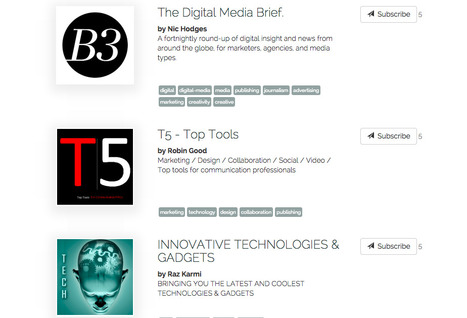
RefreshBox enables people to subscribe and create weekly 5-link-collection newsletters of their weekly professional best reads, tools or resources."
Refreshbox offers a good opportunity for anyone wanting to warm up to content curation without needing to invest a truckload of time.
The new free service allows you to easily pick any webpage or resource you find online, and to add your personal title and description /commentary to it, while saving to a draft newsletter that will be sent out to your readers once a week.
Contrary to what is suggested on the "What's This" page on the Refreshbox site, I strongly recommend that you do not just pick but also introduce and contextualize the gems you find, that's the real-value you can provide, while Refreshbox takes care of providing free-of-charge:
1. a web page for your curated newsletter(s),
2. a searchable hub where others can find it and
3. an easy-to-use subscription and distribution service without asking you anything in return.
Refreshbox allows you to place up to 5 links in each newsletter edition, and to hook up to other services (e.g.Product Hunt) to pick up your likes and preferences automatically and add them to your curated newsletter draft.
Excellent tool to warm-up to content curation by picking and collecting great resources to distribute via email.
Try it out now: www.refreshbox.co
Chrome extension: https://chrome.google.com/webstore/detail/refreshbox-add-links/ilbegopaglacdlahboheibkofipgmgno/reviews

Newsletter con tus enlaces curados favoritos.
|
|
Scooped by
Robin Good
February 9, 2015 1:40 PM
|
Scoop.it!
Defcomb is a new interesting web app, which while in full development, already offers some valuable features for anyone interested in monitoring and analyzing specific topics.
The app, which is fully free as of now, allows you to:
1) Add your selected RSS feeds, OPML file or to tap in Defcomb extensive global archive of feeds to determine your content sources.
2) Determine keyword-based filters by grouping multiple keywords
into sets.
3) Generate a news feed from your selected content sources filtered by anyone of your keyword sets or their combinations.
4) Publish a public RSS feed for each one of your news feeds.
5) Visualise occurrences of your specified set of keywords inside your sources across time
Applications for this tool may include personalised news and content discovery, topic tracking, text mining and data-visualisation.
N.B.: For novices, watch out. This tool is not difficult to use, but it may not so intuitive the first time around. Best thing to do to avoid wasting any time is to watch the short screencast video available on the home page (is video-only, no audio) and to read this short tutorial:
http://defcomb.tumblr.com/post/101673641978/introducing-the-defcomb-news-reader
Great potential. Already useful. 8/10
Free to use.
Update: Due to the high number of requests free signups have been temporarily closed.
** To get an account send an email to peter@defcomb.com with subject: "Interested in trying Defcomb - Recommended by Robin Good"
Try it out now: http://defcomb.com
Example of filtered news stream: http://www.defcomb.com/public/scenarios/415
I have included Defcomb in my T5 tools directory:
http://tools.robingood.com and in the experts tools for journalists here: http://experts.journalism.io
Another excellent personal information management tool, HT to Robin Good for spotting.




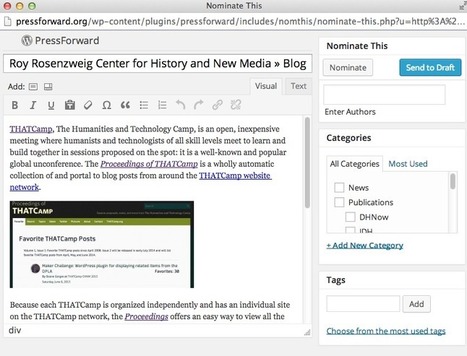






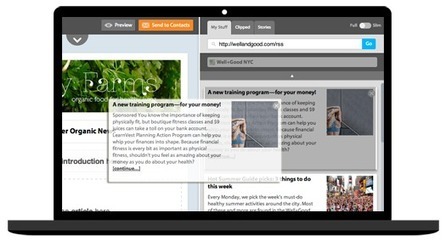







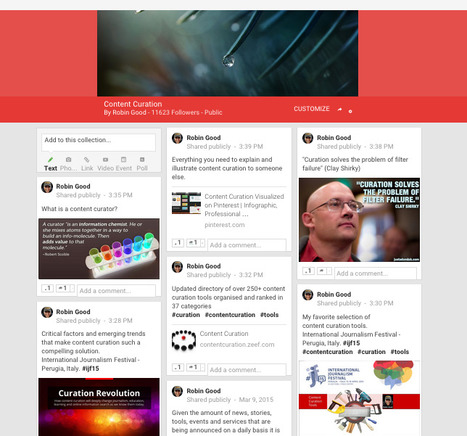




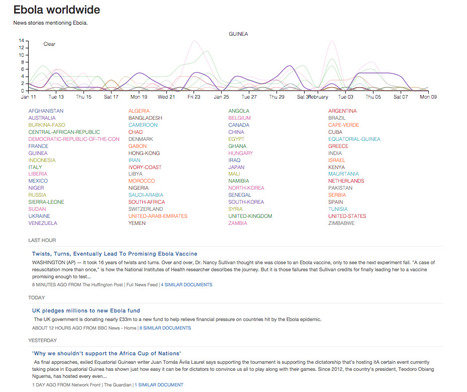



En anglais, une liste de conseils pour être sûr d'une source Twitter destinée au journalistes. Ca peut servir aussi pour certaines veilles spécialisées sur les réseaux sociaux.
Good concepts/examples to use with students when discussing the importance of verifying the quality of sources.