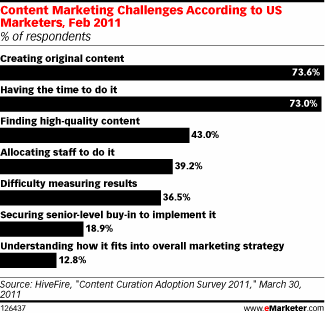
According to the content curation firm HiveFire, some of the greatest challenges facing content marketers in the United States are creating original content (73.6%) and finding high-quality content (43.0%).
In an online world of tweets, retweets, blogs and links to other blogs, it is becoming difficult to provide content that your organization can call its own to reach marketing and business objectives.
According to content curation experts Curata, 48% of marketers are using content curation as a part of their marketing strategy. Are you?
As advocates of content marketing, we at theMarketingblog enjoyed this brief, but intriguing report on the adoption of content curation, It certainly adds fuel to the fire that content marketing must be taken seriously by marketers, and we’re seeing more companies doing it according to HiveFire, the company behind Curata.
One new service that hopes to crack this conundrum is Squrl, a mobile and web application that enables people to pull in videos from popular sites like Hulu, Netflix, ESPN, DailyMotion and TED, and curate that content in one centralized dashboard.
RSS Feeds can serve as a huge time saver for staying current with industry news and trends. Consolidate all of your news into a feed reader like Netvibes.
The problem is that travelers are generally unaware of the difference and, as a result, don’t understand what they are getting when they look for experiences through a curator or an aggregator.
Ian Katz, the deputy editor of British newspaper of record the Guardian, says his boss hates the word “curation.” Whenever someone uses the art-y term in the context of editorial content, Katz explained, they seem to feel the need to surround it with finger quotes.
But whether you want to call it aggregating, curating, or simply old-fashioned editing, how we sift through the ever-growing digital trove of professionally produced and user-generated content seemed to be on everyone’s mind at this year’s SXSW.
A few weeks ago, when the NYTimes' Bill Keller bizarrely compared Arianna Huffington to a Somali pirate, we noted that journalism is a form of aggregation as well.
After all, you're taking content from the people who actually make news, and aggregating it into a publication. It appears that others are catching on to this as well.
A bunch of folks have passed along this blog post from the Zunguzungu blog, which notes that journalists are aggregating too.
I don't like the use of the word "thieves" here, as I believe (yet again) that it's a misleading and wrong use of the term, but I believe the usage here is in comparing the claims of some journalists that aggregators are "thieves."
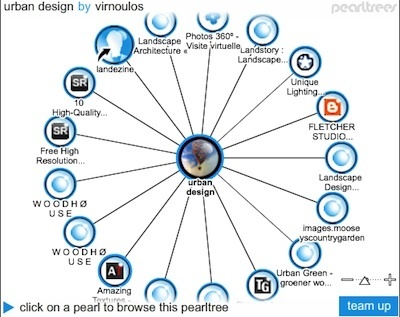
With its slick visual interface for bookmarking content, Pearltrees is unique enough that I’ve been both impressed and slightly skeptical that a mass audience will actually use it. But it looks like the site has found plenty of users.
The French startup just announced that it crossed two big milestones in March: It has more than 100,000 users curating links, and it received more than 10 million pageviews. Not only does that show the concept is resonating, but it also suggests Pearltrees could reach the scale where it can build a real business around advertising or by offering premium accounts for publishers.
Burt Herman is a co-founder of real-time curation service Storify. I first heard about Storify on this Scobleizer post, and I’ve tested it for Samsung USA at SXSW and for myself at M2C (you can see an embeded example at the bottom of this post). I met with Burt at the Samsung Blogger Lounge at SXSWi and he was kind enough to answer my questions.
Za.pe turns your Twitter account into a complete link curation platform.
Connect your Twitter account, and Za.pe will archive all the links you and your friends tweeted, display a daily summary of them, and allow you to publish a link curation of your favorite topics in one click.
As Web site owners, we used to worry about keeping the content on our Web home page fresh. We still do. We also care about ensuring that all of the information on our Web site(s) is up-to-date, accurate, consistent and easy to navigate. Today we also care about having fresh, insightful content anywhere a prospect might stumble upon it.
Now, in addition to maintaining fresh relevant content on our web sites, we also need to tweet, post, and link several times a day.
Curation has been at the core of our plan since we relaunched Myspace in November. We saw empowering users with the tools to share information about the content they love as the next step in the social web.
There are other sites that agree. YouTube and Tumblr recently launched new features that embrace curation as way of restoring editorial control to users and allowing people to follow content and topics they're interested in.
Content is the currency of the social web. It’s what people search for. What makes them click, share, comment, subscribe, donate, follow or buy from you.
But creating valuable, compelling content can be quite a challenge for many entrepreneurs, businesses and organisations.
So! If you think you’re not quite ready for that particular challenge, you should start thinking about content curation.
We all know content is king. In fact, we’re probably tired of hearing about it. But let’s face it, when it comes to your online positioning, the most effective tool is frequently published content.
For our purposes we’ll treat content as any sort of online text, graphic, video, audio file, image, logo, game, widget, etc.
According to February 2011 research from content curation firm HiveFire, nearly half of US marketing professionals surveyed are now curating content as part of their strategy, and another 42% are familiar with the practice but not participating.
Perhaps the biggest pain point for many organizations isn’t getting their video online, but rather getting their video created in the first place.
Whether you need to create your own content, have your customers or employees create it for you, or collect it from other sources, there are ways to get high-quality video content on your site without breaking the bank.
At the Online Video Platform Summit, this session, "But What About the Content? Curation, Aggregation, and Creation", examines the growing field of video curation and aggregation services, as well as offer pointers for getting your own content made quickly and inexpensively.
Content marketing software company HiveFire unveiled today a new trial program that will enable marketers to use the company's leading content curation tool, Curata, free for 30 days.
The offer comes on the heels of the findings from a recent HiveFire survey of over 150 marketing professionals which found 48 percent of marketers are currently using content curation -- the process of finding, organizing and sharing online content -- yet finding the time to create original content is among the biggest barriers to adoption.
Creating, finding and sharing compelling content can prove to consumers that a company knows its territory, is a thought leader in its industry and wants to help customers keep up-to-date on important developments. Marketers are placing an ever-greater emphasis on content marketing’s ability to add value for targets and prospects.
According to February 2011 research from content curation firm HiveFire, nearly half of US marketing professionals surveyed are now curating content as part of their strategy, and another 42% are familiar with the practice but not participating. Even among that group, 85% had done at least some content curation, for example by sending an article or other content to a prospect, but were not aware of it.
How do you stay informed ? How do you learn the latest news about your industry ?
If you are already know RSS feeds and how to aggregate them in to one single place to get your daily information boost then I suggest you skip the reading this time and go directly to the second video where Mari Smith gives you some more tips on content curation.
If you are new to RSS feeds and their aggregation, let me give me some more information on that subject.
What is a RSS feed ?
According to Wikipedia, RSS (most commonly expanded as Really Simple Syndication) is a family of web feed formats used to publish frequently updated works—such as blog entries, news headlines, audio, and video—in a standardized format.
The sheer volume of Web content makes it clear that content without curation is simply noise
Yuri Milner, the VC whose Russian Digital Sky Technologies (DST) group has put money into Facebook, Zynga and Groupon, was quoted at the Abu Dhabi Media Summit as saying, Curation is the next big thing.
Said Milner: "The question is, 'How do you select what's relevant for you?' And my guess is that it's probably going to be 50% driven by your network and 50% driven by algorithms."
To get content containing either thought or leadership enter:
To get content containing both thought and leadership enter:
To get content containing the expression thought leadership enter:
You can enter several keywords and you can refine them whenever you want. Our suggestion engine uses more signals but entering a few keywords here will rapidly give you great content to curate.


 Your new post is loading...




![IBM credits Intranet Success to Content Curation [Video] | Content Curation World | Scoop.it](https://img.scoop.it/YKZtsRdFT3-VYXnB_2HxpDl72eJkfbmt4t8yenImKBVvK0kTmF0xjctABnaLJIm9)









![Content Curation [CHART] - e-Strategy After Hours | Content Curation World | Scoop.it](https://img.scoop.it/AGgW6icHLVDncNOw8LKnkjl72eJkfbmt4t8yenImKBVvK0kTmF0xjctABnaLJIm9)